PART 1: THE SHADOW IN THE CABIN
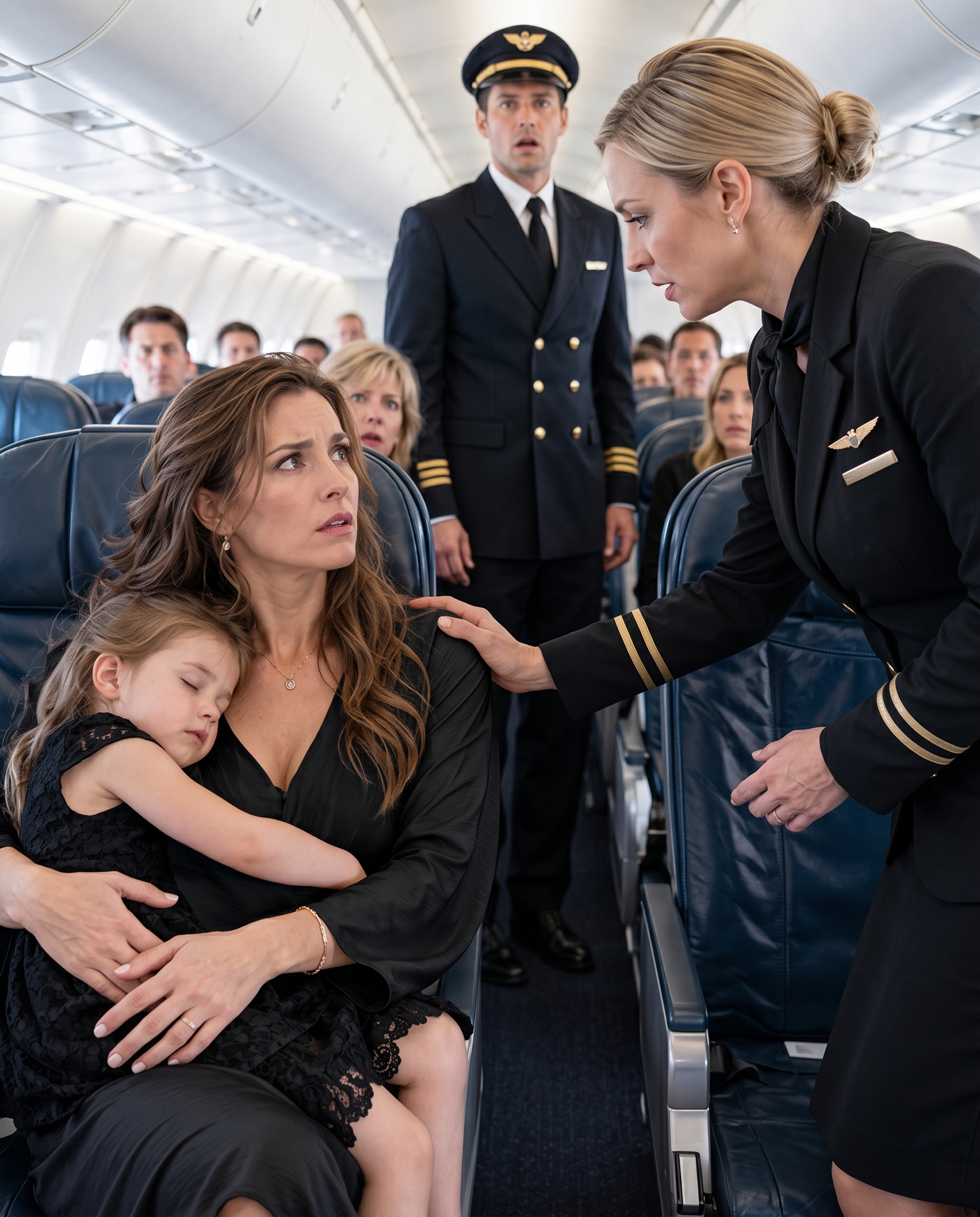
The passenger cabin of Flight 402 was bathed in a quiet twilight glow as the massive twin engine jet cut smoothly through the black skies over the northern ocean. A quiet hum vibrated through the floorboards, singing three hundred passengers into a deep, peaceful sleep.
I sat in seat 12A, resting my temple against the cold double paned window. I wore a heavy knit sweater and kept my dark hair tied back in a messy knot. To anyone passing down the aisle, I was thirty-eight year old Caroline, a widowed corporate consultant traveling to Madrid for a structural engineering summit. I looked entirely harmless, tired, and deeply uninteresting.
I watched the empty void outside, staring down at the ink black surface of the water miles below. Nobody looking at my pale face or the way my fingers clutched a lukewarm paper cup of tea would ever suspect the truth hidden beneath my peaceful surface.
Six years ago, my callsign was Phoenix.
I was not an engineer. I was a Major in the United States Air Force and one of the most decorated F-16 squadron commanders in modern military history. I had led combat sorties through non-existent airspace and delivered precision strikes with mathematical perfection.
I had buried that woman completely on the day my husband, Ronald, was killed over foreign soil. Ronald was my wingman and the father of my young son, Christopher. His jet was erased in a classified strike that the Defense Department dismissed as a mechanical accident during a training run. They covered up his sacrifice to protect international diplomatic negotiations.
The grief did not just break my heart. It shattered my entire world. I resigned my commission the day after his military funeral, gathered my young son, moved to a quiet neighborhood in Minneapolis, and swore I would never take hold of a control stick again. I traded fighter jets for neighborhood carpools, choosing the quiet illusion of suburban life over the brutal reality of warfare.
The illusion shattered violently at two fourteen in the morning.
A sharp chime echoed over the cabin speakers, cutting through the low rumble of the engines.
“Ladies and gentlemen,” a voice crackled through the intercom. It was supposed to belong to the captain, but the tone was breathless, high pitched, and trembling with unrestrained panic. “This is Captain Raymond. We are currently experiencing an unexpected operational situation that requires immediate technical support. If there is anyone aboard this aircraft with experience flying military fighter jets, please press your attendant button and notify our crew right now.”
A sudden wave of gasps swept through the rows. Passengers jerked upright, flicking on overhead lights and filling the cabin with a rising chorus of anxious whispers.
I sat frozen in seat 12A. My pulse spiked instantly, and a cold sweat broke out across my back.
Why would a commercial airliner ever need a fighter pilot?
If an engine failed or the hydraulics lost pressure, any private pilot in first class could assist with the manuals. Fighter pilots are trained for entirely different scenarios like high G evasive maneuvers, air combat, and extreme physical stress.
I squeezed my eyes shut, digging my fingernails into my palms until they left red marks. I pleaded silently with the universe, praying that a retired Navy aviator was sitting up in first class so I could stay hidden for the sake of my son.
A flight attendant rushed past my row, her face completely drained of color as her trembling hands scanned the cabin. She was not searching for an off duty airline employee to check an instrument panel. She looked like a person staring into a nightmare.
My long buried instincts spoke louder than my fear because an aviator never abandons people in danger.
I took a deep, controlled breath and unbuckled my belt with a distinct metallic click that sounded sharp in the quiet cabin.
I stood up in the aisle.
In that single movement, the quiet suburban mother vanished. The heavy fabric of my sweater felt like body armor, and my spine straightened into a rigid military posture. My breathing slowed into the deliberate rhythm I used before entering a combat zone.
I stepped forward and placed a steady hand on the flight attendant’s shoulder.
“I am a former Air Force F-16 Squadron Commander,” I told her, keeping my voice flat, clear, and absolute. “Take me straight to the cockpit.”
PART 2: BLOOD ON THE CONSOLE
The flight attendant did not question my authority for a second. My tone bypassed every standard procedure, forcing her to turn on her heel and hurry toward the front of the aircraft.
I followed her past the heavy privacy curtain and into the forward galley area.
We stopped before the heavy security door protecting the flight deck. Her fingers shook violently as she punched in the access code, failing twice before the indicator light finally flashed green.
The lock released with a soft hiss.
I stepped over the threshold expecting to find red warning lights, blaring pull up alarms, and two pilots fighting a failing electrical grid.
Instead, I stepped directly into a crime scene.
The thick smell of copper and blood hit my throat instantly, overpowering the dry recycled air of the cabin.
The co-pilot lay slumped on the metal grating between the seats, bound tightly at the wrists with heavy plastic ties while dark blood pooled around his temple. Captain Raymond was strapped into the left seat with his arms pinned to the rests, bleeding heavily from a gashed forehead that stained his white shirt.
Directly behind the captain stood a tall man in a dark tailored suit, holding a suppressed pistol against the base of the pilot’s skull. Behind him stood two tactical operatives wearing Kevlar vests and holding compact automatic rifles.
This was not an equipment failure or a atmospheric emergency. This was a calculated paramilitary takeover.
My military conditioning instantly took control of my mind, freezing out all fear and slowing my perception of time.
My eyes swept the small space to calculate the tactical layout. I counted three armed targets, noted the tight entry points, and mapped the path to the heavy emergency axe mounted beside the jump seat. It was three feet away, but drawing it against three loaded weapons was impossible.
“What is the meaning of this?” I asked, making my voice cold and firm rather than frightened.
The man in the suit offered a dark, calculated smile that never reached his eyes.
He lowered the pistol from the captain’s neck, keeping it pointed toward the deck as he turned his body to face me directly.
He reached down to the empty flight console and picked up a thick red folder marked with a classified stamp. He tossed it onto the dashboard between the flight instruments.
My eyes locked onto the black logo printed across the cover. It was a double V emblem representing the Apex Syndicate, the international arms network responsible for selling the experimental missile that took my husband’s life six years ago.
A chilling realization washed over me as I realized the folder was not an accident.
“Welcome to the flight deck, Commander Caroline,” the man in the suit said, his voice smooth and laced with a cold accent. “Or perhaps I should address you by your real callsign, Valkyrie.”
He pointed the barrel of his weapon toward the vacant right seat.
“Sit down in the pilot seat,” the leader commanded smoothly. “We require a very specific flight path tonight through unmapped airspace. We needed a pilot capable of flying low under regional defense radars, and we knew your training would force you to respond to a cabin emergency.”