 PART 2
Brandon’s call came at 11:52 the next morning.
I knew it was him before I looked at the screen.
There are calls a father recognizes instinctively.
The first call from a child away at college.
The late-night call after an accident.
The trembling call announcing a first grandchild.
And then there are calls like this one.
Calls filled with panic disguised as anger.
I let the phone ring four times before answering.
“Hello, Brandon.”
“What did you do?”
No greeting.
No apology.
No mention of the night before.
Just accusation.
I sat in a leather chair across from my attorney, Samuel Price, while sunlight filtered through the blinds of his downtown Houston office.
The final transfer documents were stacked neatly on the desk between us.
“What makes you think I did anything?” I asked.
“There are strangers at my house.”
I looked at Samuel.
He raised one eyebrow but said nothing.
“Not your house,” I replied.
Silence.
For perhaps the first time in thirty years, my son had no immediate answer.
Then he laughed.
It was short and ugly.
“Okay, Dad. Very funny.”
“I’m not joking.”
“You gave me this place.”
“I allowed you to live there.”
“You said it was ours.”
“I said you could treat it like your home.”
“That means the same thing.”
“No, Brandon. It doesn’t.”
I heard movement on the other end.
A door slammed.
Amber was saying something in the background, her voice sharper than usual.
Then Brandon lowered his voice.
“There’s some man downstairs claiming the property was sold this morning.”
“That sounds accurate.”
“You sold it?”
“Yes.”
“My house?”
“My property.”
Another silence.
I could almost picture him standing inside the marble foyer I had paid for, gripping his expensive phone, staring at walls he had chosen to believe belonged to him.
The funny thing about entitlement is that it grows most easily in places where nothing has been earned.
Brandon had never made a mortgage payment.
Never paid the property taxes.
Never signed a purchase agreement.
Never asked how ownership had been structured.
He simply assumed that because I loved him, everything I provided must become permanently his.
“You can’t do this,” he finally said.
“I already did.”
“I’ll sue you.”
“For selling property owned by my company?”
“You told everyone it was mine.”
“That won’t change the deed.”
His breathing became heavier.
I remembered the same breathing the night before after the thirtieth s.lap.
Back then, he had believed he was the powerful one.
Now paperwork had done what I refused to do with my fists.
It had reminded him who actually held control.
“Who bought it?” he demanded.
“That’s confidential.”
“Tell them the deal is off.”
“No.”
“Dad!”
I moved the phone slightly away from my ear.
Samuel glanced toward me.
I gave him a small nod.
Everything was fine.
Actually, for the first time in years, everything felt remarkably clear.
“You humiliated me,” Brandon said.
I almost laughed.
Not because it was funny.
Because the irony was extraordinary.
“You stood in a room full of people and struck your sixty-eight-year-old father thirty times.”
His voice dropped.
“That was different.”
“How?”
“You embarrassed me first.”
“I gave you a birthday present.”
“You challenged me in my own home.”
“Again, Brandon, it was never your home.”
He cursed under his breath.
Then he said the sentence that confirmed I had made the right decision.
“You’re going to regret this.”
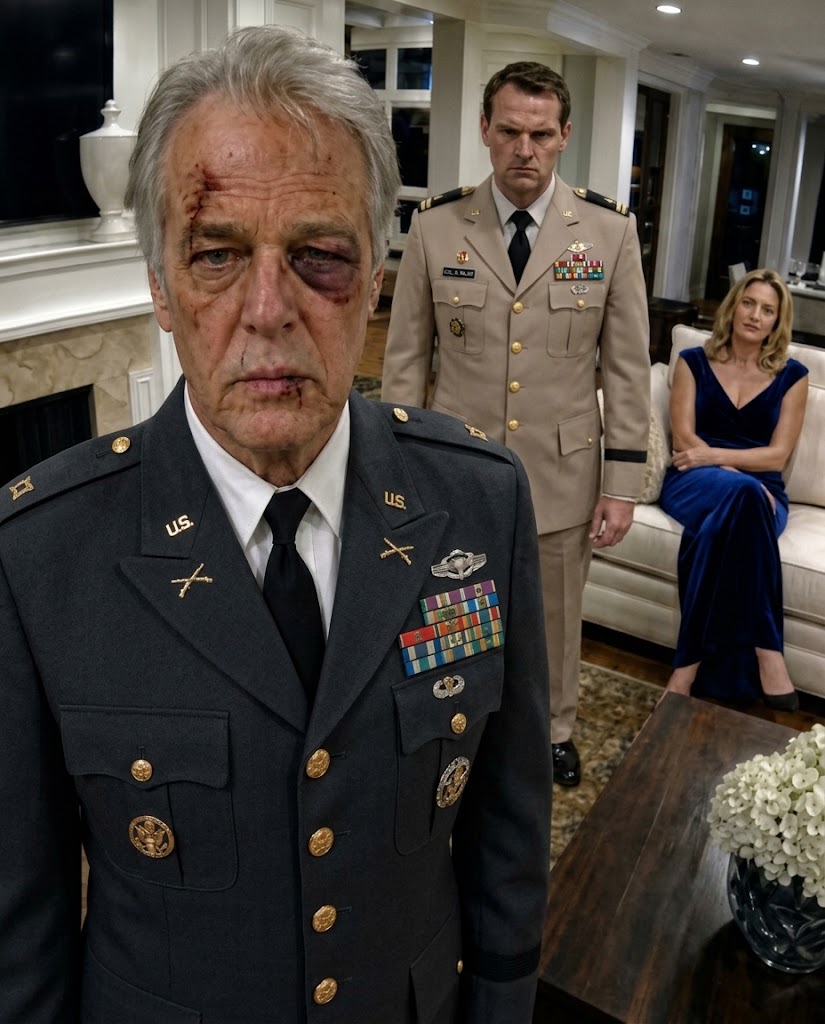
I touched the swelling beneath my left eye.
“Thirty times,” I said.
Silence.
“What?”
“I counted every one.”
His confidence vanished from his voice.
“Dad—”
“Thirty.”
I ended the call.
Samuel leaned back.
“You sure you don’t want to file a report?”
“No.”
“You have injuries.”
“I know.”
“There were witnesses.”
“I know that too.”
He studied me carefully.
Samuel and I had known each other for almost twenty-five years.
He handled my business acquisitions, estate planning, commercial contracts, and several lawsuits.
He had seen me angry.
He had seen me worried.
He had even seen me cry once, after my wife Eleanor passed away.
But he had never seen me like this.
Calm.
Final.
“You’re not finished,” he said.
It wasn’t a question.
“No.”
“What else?”
I looked out across the Houston skyline.
When Brandon was nine years old, I used to bring him downtown on Saturdays.
We would stand beside construction sites while I explained how buildings rose.
Foundations first.
Then structure.
Then everything people could see.
I had tried to teach him the same principle about life.
Build something underneath yourself before you start showing the world how high you stand.
Somewhere along the way, he had remembered only the height.
“Pull every document connected to Redwood Capital for the last three years,” I said.
Samuel frowned.
“All of them?”
“Everything.”
“That’s thousands of pages.”
“Then start with anything involving Brandon.”
His expression changed.
“Why?”
“Because last night didn’t happen suddenly.”
That was something I had realized during the drive home.
People like to believe cruelty arrives all at once.
It rarely does.
It arrives in increments.
A disrespectful joke no one challenges.
A request that becomes a demand.
An insult excused as stress.
A boundary crossed and then crossed again.
Until one day, everyone pretends the final act came from nowhere.
It hadn’t come from nowhere.
Brandon had been preparing me for that birthday dinner for years.
I just hadn’t wanted to admit it.
Samuel opened his laptop.
“Give me an hour.”
I stood.
“Send anything unusual to me.”
“Where are you going?”
“Home.”
“To rest?”
“No.”
I picked up my coat.
“To remember who my son used to be.”
The house I lived in was nothing like Brandon’s mansion.
Smaller.
Older.
Quiet.
Eleanor and I had purchased it when Brandon was still a toddler.
She used to complain that the kitchen was too narrow and then refuse every suggestion I made about remodeling it.
“Some rooms should stay imperfect,” she once told me.
“They remind you that life happened there.”
After she passed, I left almost everything untouched.
Her blue ceramic bowl still sat beside the window.
Her gardening gloves were still tucked inside a cabinet near the back door.
And upstairs, in a cedar chest, there were photographs.
Brandon on his first bicycle.
Brandon missing his front teeth.
Brandon asleep against Eleanor during a family road trip to San Antonio.
Brandon at sixteen wearing one of my work helmets, laughing because it was too large for his head.
I sat on the floor with those photographs around me.
For a long time, I wondered what Eleanor would have said.
She would not have defended him.
That much I knew.
Eleanor had been kind, but never weak.
She believed love without boundaries eventually turned into permission.
I had forgotten that after she was gone.
Maybe guilt had something to do with it.
I was working constantly during Brandon’s childhood.
Construction contracts.
Travel.
Deadlines.
Meetings.
I missed baseball games and school events and promised myself I would compensate later.
Later became money.
Tuition.
Cars.
Investment accounts.
The River Oaks house.
Every gift was partly an apology.
And apparently every apology had taught Brandon that he deserved another one.
My phone buzzed.
Amber.
I ignored it.
Then again.
Then again.
Seven calls arrived within twenty minutes.
Finally, a message appeared.
Franklin, please call me. There is something about Brandon you need to know.
I stared at the words.
My instinct was to delete them.
Amber had watched what happened.
She had sat only a few feet away while Brandon struck me.
She could have stopped him.
She could have called for help.
She could have simply walked out.
Instead, she smiled.
Whatever she wanted now, sympathy was not part of the equation.
A second message arrived.
He thinks losing the house is the worst thing you can do to him.
Another followed.
It isn’t.
I placed the phone on the table.
Then Samuel called.
“Franklin.”
Something in his tone made me sit straighter.
“You found something?”
“Maybe.”
“What does maybe mean?”
“I found a petition.”
My chest tightened.
“What kind?”
“There was a draft petition prepared eighteen months ago concerning your competency.”
I said nothing.
Samuel continued carefully.
“It was never filed with the court.”
“Who prepared it?”
“A private attorney named Leonard Briggs.”
I knew the name.
Briggs had represented one of Brandon’s business partners.
“What exactly does it say?”
“It alleges memory problems, financial confusion, irrational decision-making, and vulnerability to manipulation.”
I almost smiled.
“I suppose none of that bothered them when I purchased his house.”
“This gets worse.”
“How?”
“The draft asks for temporary financial control of several assets if you were found incapable of managing them.”
“Which assets?”
“Redwood Capital. Your investment accounts. Two commercial properties. And the family trust.”
The room suddenly felt colder.
I stood and walked toward the window.
Outside, the oak trees barely moved in the winter air.
“How did you find this?”
“There’s a copy buried in Redwood’s archived legal correspondence.”
“Why would Redwood have it?”
“I’m trying to determine that.”
“Was Brandon copied?”
“Yes.”
“Amber?”
A pause.
“Yes.”
I closed my eyes.
There it was.
The feeling every parent fears but rarely describes.
Not anger.
Something deeper.
The realization that your child did not simply lose control once.
He had been thinking about your disappearance from his financial life for more than a year.
“What evidence did they claim?” I asked.
“Several incidents.”
“Such as?”
“You forgetting a lunch meeting.”
“That happened.”
“Writing the wrong date on a contract draft.”
“I corrected it before execution.”
“A minor traffic incident.”
“Someone backed into me.”
“I know.”
Samuel sighed.
“They took ordinary things and arranged them to look like a pattern.”
I laughed once, without humor.
“Very efficient.”
“There’s more.”
“Of course there is.”
“An attached statement from someone who claims to have personally observed your decline.”
I turned away from the window.
“Who?”
“The signature page is missing from the electronic copy.”
For the first time that day, genuine unease moved through me.
“Can you recover it?”
“I’m working on it.”
I remembered Amber’s message.
I ended the call with Samuel and immediately called her.
She answered before the first ring finished.
“Franklin.”
“You said you had something to tell me.”
Her voice dropped.
“Are you alone?”
“Yes.”
“Brandon isn’t with me.”
“Good.”
“Where is he?”
“He left the house about twenty minutes ago.”
“Going where?”
“I don’t know.”
I heard her inhale slowly.
“Franklin, I need you to understand something before I tell you this.”
“No speeches, Amber.”
“I’m serious.”
“So am I.”
Another pause.
“I knew about the competency petition.”
“I figured.”
“But it wasn’t my idea.”
“You helped.”
“I signed nothing.”
“You watched him build a case against me.”
“Yes.”
The honesty surprised me.
“Why?”
“Because I was scared of him.”
I almost hung up.
Then she said, “And because at first, I thought he was right.”
I stayed silent.
“He kept saying you were getting older,” she continued.
“That you were making irrational decisions. That someone needed to protect the family assets.”
“Protect them for whom?”
“For us.”
“There it is.”
“I know how it sounds.”
“It sounds accurate.”
She exhaled.
“But then I realized he wasn’t trying to protect anything.”
“What was he doing?”
“Preparing to take control before you could change your estate plan.”
That caught my attention.
“What made him think I would?”
“You said something at Christmas two years ago.”
I searched my memory.
“What?”
“You mentioned starting a charitable foundation.”
I remembered.
Eleanor had once dreamed of funding vocational scholarships for students who wanted to work in construction, engineering, and skilled trades.
I had casually told Brandon I might place a large part of my estate into a foundation bearing her name.
At the time, he had said it sounded wonderful.
Apparently he had gone home and calculated what generosity might cost him.
“How much did he think I was giving away?”
“Most of it.”
“Did he tell you that?”
“Yes.”
“And you agreed to help him stop me?”
“Not exactly.”
“That sounds like exactly what happened.”
Her voice cracked.
“I’m not asking you to forgive me.”
“Good.”
“I’m trying to tell you something before he finds out I know.”
“What?”
“He didn’t create the plan alone.”
My fingers tightened around the phone.
“Who helped him?”
“I don’t know everything.”
“Amber.”
“I’m telling you the truth.”
“You said you had proof.”
“I do.”
“Then give me a name.”
There was a long silence.
When she spoke again, she sounded frightened.
“Check Eleanor’s trust.”
I froze.
“What about it?”
“The amendment from six years ago.”
“There was no amendment.”
“Yes, there was.”
“No.”
“Franklin, I’ve seen it.”
My pulse quickened.
Eleanor had created a trust shortly before her death.
Most of her personal assets passed to me, with a smaller protected portion ultimately designated for Brandon and any future grandchildren.
Samuel and I had reviewed it repeatedly.
There had never been an amendment.
“What does this supposed amendment say?”
“That if you became incapacitated, control of Eleanor’s remaining trust assets could move temporarily to a secondary trustee.”
“Who?”
“I don’t know.”
“You’ve seen the document.”
“I saw only a copy Brandon kept.”
“Then whose name was on it?”
“The trustee page was missing.”
I almost laughed at the repetition.
Missing signatures.
Missing names.
Missing pages.
Someone had gone to great lengths to leave footprints without leaving a face.
“Send me everything you have.”
“I can’t.”
“Why?”
“Because Brandon keeps the documents in a safe.”
“Then photograph them.”
“I already did.”
My anger paused.
“Where are the photographs?”
“I’ll send them.”
“Why now?”
Her answer came immediately.
“Because last night I finally understood what he’s capable of.”
“You were smiling.”
“I know.”
The shame in her voice sounded real.
“I was terrified, Franklin.”
“Terrified people usually leave.”
“Sometimes terrified people pretend they’re on the right side of the room.”
That sentence stayed with me.
Before I could respond, I heard a noise on her end.
A door.
Amber whispered, “I have to go.”
“Amber—”
“Don’t trust the first name you find.”
Then the call ended.
Thirty seconds later, twelve photographs arrived.
I forwarded them to Samuel.
He called back within fifteen minutes.
“You need to come downtown.”
“What did you find?”
“Not over the phone.”
“I’m sixty-eight, Samuel. Stop trying to create suspense.”
“This isn’t suspense.”
His voice was flat.
“It’s caution.”
Forty minutes later, I was back in his office.
This time, two additional people were waiting.
One was his senior estate attorney.
The other was a forensic document examiner named Marjorie Wells.
Copies of Amber’s photographs were spread across the conference table.
Samuel pointed to one.
“This appears to be an amendment to Eleanor’s trust dated six years ago.”
“Impossible.”
“That was my reaction.”
Marjorie adjusted her glasses.
“The signatures are convincing.”
“Convincing?”
“Not necessarily authentic.”
I leaned closer.
Eleanor’s name appeared at the bottom.
So did mine.
For several seconds, I simply stared.
My signature looked correct.
The loops.
The pressure points.
Even the slight downward angle I developed in my forties.
“I never signed this.”
“I believe you,” Samuel said.
“What does the amendment do?”
His estate attorney answered.
“If recognized as valid, it grants the secondary trustee significant authority if you are declared incapacitated.”
“And who is the secondary trustee?”
Samuel slid another sheet toward me.
This photograph showed the page Amber claimed had been missing.
Apparently she had found more than she first admitted.
I looked at the name.
Then I looked again.
My first reaction was confusion.
My second was disbelief.
My third was something I cannot adequately describe.
“Is this a joke?”
“No,” Samuel said.
“That person is dead.”
“Legally, yes.”
I stared at him.
“What does that mean?”
He folded his hands.
“The named secondary trustee is your brother.”
I felt the room tilt slightly.
“Daniel died eleven years ago.”
“That is what everyone believed.”
I stepped backward from the table.
My younger brother, Daniel Reeves, had disappeared after a boating accident near Galveston.
Pieces of the boat were recovered.
His wallet was found inside a floating jacket.
His body never was.
After seven years, he had been legally declared dead.
Brandon had been nineteen when it happened.
The family mourned.
We held a memorial.
I personally paid Daniel’s debts and closed his business affairs.
“Why would Eleanor name Daniel?” I asked.
“She wouldn’t,” Samuel replied.
I knew that.
Eleanor had never trusted my brother.
Daniel was charming, clever, and perpetually broke.
Every opportunity became a shortcut.
Every relationship became leverage.
He borrowed money and forgot repayment.
Started businesses and abandoned partners.
Promised change whenever consequences arrived.
I loved him because he was my brother.
Eleanor tolerated him because she loved me.
But she would never have placed him in control of her trust.
“Then whoever created this document chose his name for a reason,” I said.
Samuel nodded.
“Possibly because a legally dead trustee would initially trigger a successor provision.”
“Who is the successor?”
Nobody answered.
I looked at the next page myself.
Then I found it.
Successor Trustee: Brandon Michael Reeves.
I sat down.
For the first time since the birthday dinner, my hands began to shake.
The architecture of the plan became visible.
Declare me incompetent.
Activate a fraudulent amendment.
The supposedly dead Daniel could not serve.
Authority would pass to Brandon.
A legal theft disguised as family protection.
“How much could he control?” I asked.
Samuel gave me the number.
“Potentially seventy-two million dollars in combined assets.”
I stared at the documents.
The house I sold that morning was worth less than five million.
Suddenly, I understood why Brandon had been furious about more than losing a home.
He believed I had started noticing things.
Maybe he feared I was moving assets.
Maybe the birthday dinner had not simply been rage.
Maybe he had been trying to intimidate me into submission before executing the next phase of his plan.
“There’s still one problem,” Marjorie said.
I looked at her.
“This document requires notarization.”
She pointed to the seal.
“And?”
“The notary was real.”
“Was?”
“She died three years ago.”
“Can we verify the record?”
“We already started.”
Samuel turned his laptop toward me.
“The notary maintained journals.”
I leaned forward.
“Did she record this amendment?”
“No.”
A strange relief passed through me.
“So we can prove it was forged.”
“Possibly.”
“Possibly?”
Marjorie tapped the image.
“The seal itself appears genuine.”
“How?”
“We don’t know.”
Samuel’s phone rang.
He checked the caller ID and frowned.
“I asked one of my investigators to trace Briggs.”
He answered.
For the next minute he said almost nothing.
Then he ended the call.
“What?” I asked.
“Leonard Briggs closed his practice eight months ago.”
“Where is he?”
“Unknown.”
“Convenient.”
“There’s more.”
I waited.
“He withdrew almost nine hundred thousand dollars in cash before disappearing.”
I looked back at Brandon’s name.
My son had a comfortable job, but not the sort of income that produced nine hundred thousand dollars casually.
“Follow the money.”
“We will.”
“And Daniel?”
Samuel hesitated.
“What about him?”
“If someone used my dead brother’s name, I want to know why.”
He nodded.
I left the office just after six.
Houston traffic was thick, but I barely noticed.
I kept thinking about Daniel.
When we were children, he followed me everywhere.
When I built forts, he knocked them down.
When I saved money, he spent his.
When our father died, Daniel cried against my shoulder even though he was already twenty-seven.
He could be selfish.
Dishonest.
Infuriating.
But dead?
I had accepted that long ago.
At least I thought I had.
Halfway home, my phone rang from an unknown number.
Normally, I ignored those calls.
That night, I answered.
“Franklin Reeves?”
The voice belonged to a man.
Older.
Low.
Familiar in a way that made every hair on my arms rise.
“Who is this?”
The man breathed slowly.
“You sold the River Oaks house.”
My grip tightened on the steering wheel.
“Who is this?”
“That was clever.”
“Answer me.”
“You always were better at buildings than people.”
My foot lifted from the accelerator.
Cars rushed past me.
There are voices you forget.
And voices your body remembers even when your mind refuses.
I pulled onto the shoulder.
“No,” I whispered.
The man laughed softly.
A laugh I had not heard in eleven years.
“Still dramatic, Frankie.”
Nobody called me Frankie.
Nobody except one person.
My younger brother.
“Daniel?”
Silence.
Then:
“Tell your lawyer to stop digging.”
My heart pounded.
“You’re alive.”
“That depends on who’s asking.”
“You let us bury an empty coffin.”
“You buried what you needed to bury.”
“Eleanor cried for you.”
“I know.”
“Brandon mourned you.”
Another silence.
Then Daniel said something that chilled me more than the February air outside my car.
“Brandon knew.”
I could not speak.
“He knew what?”
“Ask him when we met again.”
The line disconnected.
I remained parked on the shoulder for several minutes.
Thirty s.laps had ended my excuses for Brandon.
Selling the house had ended his illusion of ownership.
But this—
This was different.
This reached backward through eleven years of grief, lies, money, and carefully hidden agreements.
My own son had known that my brother was alive.
Maybe for months.
Maybe for years.
And if Daniel had helped create the fraudulent trust amendment, then Brandon had not simply planned to take my assets.
He had built his plan with a ghost.
I drove home in silence.
At 8:41, Samuel called again.
“We traced a payment connected to Briggs.”
“To whom?”
“A consulting company registered in Nevada.”
“Who owns it?”
“We’re still unwinding the ownership structure.”
“Daniel?”
“Maybe.”
Then Samuel paused.
“But Franklin, there’s something else.”
“What?”
“We found the original metadata from the competency petition.”
I waited.
“The first draft wasn’t created eighteen months ago.”
“When?”
“Four years ago.”
That meant Brandon had started planning this long before I mentioned Eleanor’s charitable foundation.
“Who created it?”
“The file originated from a computer registered to someone else.”
“Who?”
Samuel gave me the name.
For a moment, I genuinely thought I had misheard him.
“Repeat that.”
He did.
I sat slowly at the kitchen table.
Because the name was not Daniel’s.
It was not Amber’s.
It was not Leonard Briggs.
It belonged to the one person I had trusted more than anyone after Eleanor died.
The person who knew every account I owned.
Every weakness in my estate plan.
Every argument Brandon and I had ever had.
The person who had sat across from me that morning while I signed away the River Oaks house.
Samuel Price.
My own lawyer.
And he was still speaking on the phone as if I had learned nothing.
…If you want to know what happened next, please type “YES” and like for more.