Chapter 1: The Scent of the Fall
The genesis of my undoing did not arrive wrapped in a cinematic cliché. There was no scarlet lipstick smeared across a starched collar, no cryptic, midnight charges on our joint American Express, no whispered phone calls abruptly terminated when I walked into the room.
It began, as tragedies often do, in the numbing rhythm of the mundane.
It was laundry.
I stood in the utility room of our home in Mercer Island, the rhythmic hum of the dryer vibrating through the soles of my slippers. Rain lashed against the frosted glass of the window, a typical Seattle Tuesday. I was pulling Ethan’s freshly laundered dress shirts from the drum, shaking out the warm cotton to prevent wrinkles.
I lifted his favorite Oxford button-down—a pale, icy blue woven by a tailor in Milan we had visited for our tenth anniversary. As I brought the fabric toward my chest to fold the sleeves, a scent struck me.
I froze, the shirt suspended in the air.
I closed my eyes and inhaled again. It wasn’t the familiar, comforting notes of my own vanilla-bean lotion. It wasn’t the sharp, sterile alkalinity of hotel soap, nor the cedarwood of his expensive cologne.
It smelled distinctly, undeniably younger.
It was a sharp concoction of spun sugar, cheap jasmine, and reckless ambition. It was a fragrance that possessed absolute confidence and zero subtlety. It was a smell that had absolutely no geographical right to exist within the borders of my fifteen-year marriage.
A cold dread coiled in the pit of my gut, heavy and venomous. I stood under the harsh fluorescent light, my fingers tightening around the damp cotton.
You are being paranoid, Eleanor, I told myself, forcing my hands to resume their task. You are exhausted.
And I was. I had spent fifteen years laying the foundational bricks for the life that allowed Ethan to rise to the position of Managing Partner at Vanguard Financial. When we met in our twenties, he was drowning in student debt, wearing a thrift-store suit with frayed cuffs. I worked two jobs to keep our lights on. I designed his first presentation decks on a borrowed laptop. I was the silent, tireless architect of the man he had become.
Maybe a coworker had embraced him after closing a major acquisition. Maybe someone wearing too much perfume had brushed against his shoulder in a packed, claustrophobic elevator. Maybe I was simply worn out by the relentless velocity of our lives, suffocated by too much espresso and the creeping shadows of a decade and a half of compromise.
I folded the shirt. I placed it in the basket. I willed my heart to stop its frantic, erratic beating against my ribs.
But a seed of doubt had been planted in the damp soil of my mind, and it only took three hours for the laptop to provide the sunlight it needed to aggressively bloom.
Chapter 2: The Digital Autopsy
Ethan had stepped out onto the back patio to take a call with the London office. The heavy glass door slid shut behind him, sealing him in a soundproof box of driving rain and animated hand gestures.
He had left his MacBook open on the Calacatta marble of the kitchen island.
I wasn’t trying to pry. I have never been the kind of wife who audits her husband’s digital footprint. I was simply wiping a scattering of almond crumbs from the counter with a damp cloth when the screen flared to life, illuminating the dim kitchen.
A calendar reminder had materialized in the top right corner of the display.
Dinner — L. Parker. 7:30 p.m. Don’t be late. ❤️
My stomach dropped so violently it felt as if a fault line had violently cracked open right through the center of the kitchen floor. My vision blurred at the edges. I had to grip the cold edge of the marble island just to remain upright, my knuckles turning stark white.
The red heart emoji felt like a physical blow to the sternum.
Before the rational, dignified part of my brain could intervene, my hand moved. I touched the trackpad.
I didn’t open his email. I opened the iMessage app, synced flawlessly to his phone. The hubris of the man. The sheer, unadulterated arrogance to leave the conduit of his betrayal open on the kitchen counter, trusting the blind faith of his wife.
Message after message populated the screen. I scrolled upward, my breath trapped in my throat.
There were mirror selfies sent from corporate bathrooms. There were teasing, juvenile jokes about the boring board meetings they had both sat through. There was a photograph of a bare, freckled shoulder tangled in hotel sheets—sheets I recognized from his “solo” conference in Chicago three weeks prior.
Then, I saw a voice recording sent from Ethan’s phone just that morning.
My hand trembled as I clicked the small play icon.
“I can’t stop thinking about you,” Ethan’s voice murmured through the tinny laptop speakers.
It was the tone that broke me. It was a low, gravelly timbre, thick with an intoxicating hunger. It was a voice he had not used in my presence for half a decade.
My hands went completely, terrifyingly numb.
The affair itself was a jagged blade, but what truly destroyed me was the effortless choreography of his deceit. He hadn’t stumbled into a momentary lapse of judgment after too many bourbons. He hadn’t accidentally fallen into someone else’s orbit. He had deliberately, meticulously constructed a parallel universe, tending to a vibrant new garden while letting our shared life quietly wither, all while pretending our foundation was made of stone.
I opened his Outlook to search the name. I needed a face. I needed to know the architect of my replacement.
I found an email thread. I scrolled to the bottom to view the corporate signature.
Lila Parker.
Marketing Intern.
An intern. God, Ethan. How profoundly, devastatingly unoriginal.
I didn’t cry. The tears would not come. Instead, a terrifying, icy clarity washed over my brain. I opened a new browser window. With methodical, robotic precision, I took screenshots of every photograph, every explicit text, every calendar invite. I attached the audio file. I forwarded the entire devastating cache to a secure email address I had created for my freelance business.
I deleted the sent receipts from his outbox. I carefully moved the cursor back to the exact pixel where I had found it.
I shut the laptop, leaving the screen resting precisely at the forty-five-degree angle he preferred.
Behind me, I heard the heavy slide of the patio door opening, followed by the wet squeak of Ethan’s leather loafers on the hardwood.
Chapter 3: The Art of the Charade
“Bloody London office,” Ethan sighed, shaking the rain from his hair like a golden retriever. He walked into the kitchen, carrying the scent of damp wool and ozone.
He smiled. A warm, easy, devastatingly familiar smile.
He walked around the marble island, leaned down, and kissed my cheek. His lips were cold from the rain. I held my breath, terrified he would feel the frantic, bird-like fluttering of my pulse against my jawline.
“How was your day, El?” he asked, walking over to the bar cart. He poured himself two fingers of Macallan, the amber liquid splashing cheerfully against the crystal. He looked entirely unburdened. He looked like a man who believed he owned the world and everything in it.
I watched him play the part of the loyal, weary husband. The performance was so smooth, so terrifyingly flawless, that a wave of pure nausea washed over the back of my tongue.
How many times? my mind screamed. How many evenings has he stood in this kitchen, drinking my liquor, kissing my face, while tasting her on his teeth?
“Everything okay?” he asked, pausing with the glass halfway to his mouth. His brow furrowed in a perfect imitation of marital concern.
I forced my facial muscles to arrange themselves into a mask of mild exhaustion. I made myself smile. It felt like stretching dry parchment over bone.
“Just tired,” I said softly. “It was a long day.”
He believed it. Of course he did. He relied on my exhaustion. My fatigue was the smoke screen that allowed his affair to operate in the dark.
“Get some rest, sweetheart,” he murmured, taking a sip of his scotch. “I’ve got an early morning tomorrow. Big pitch with the tech sector.”
Dinner with L. Parker. 7:30 p.m.
Over the next four days, I lived in a state of suspended animation. I became a phantom in my own home. I cooked his dinners. I asked about his meetings. I listened to his fabricated complaints about traffic and incompetent junior executives. I did not scream. I did not hurl our wedding china against the imported backsplash.
I knew exactly what Ethan wanted. If I confronted him with tears and rage, if I gave him the explosive, hysterical collapse he was secretly bracing for, I would become the crazy wife. I would give him the justification he needed to leave. She’s unstable, Lila, he would whisper in the dark. We’re toxic together. You’re my peace.
I refused to give him that narrative. I refused to let him exit this marriage as a victim of my emotional volatility.
On Friday afternoon, while he was at the office—likely sharing a stolen coffee in a supply closet with a girl who was in middle school when we got married—I drove to downtown Seattle and sat in the sterile, leather-bound office of Miriam Vance, the most ruthless family law attorney in the Pacific Northwest.
I showed her the digital autopsy. We drafted the papers. We froze the joint savings accounts. We fortified the perimeter of my future.
By the time I returned to Mercer Island, the sun was sinking below the tree line, painting the sky in bruised shades of purple and black.
That night, Ethan complained of a headache. He took a heavy dose of melatonin and fell into a deep, snoring sleep by ten o’clock.
I stood in the doorway of our master bedroom, listening to the rhythmic drag of his breathing. The moonlight spilled across his face, illuminating the silver at his temples—the silver I had loved, the stress lines I had helped soothe. He was a stranger to me now. A hollow shell of a man occupying my bed.
I turned on my heel and walked softly down the hall, pulling down the attic stairs. It was time to begin the extrication.
Chapter 4: The Packing of a Life
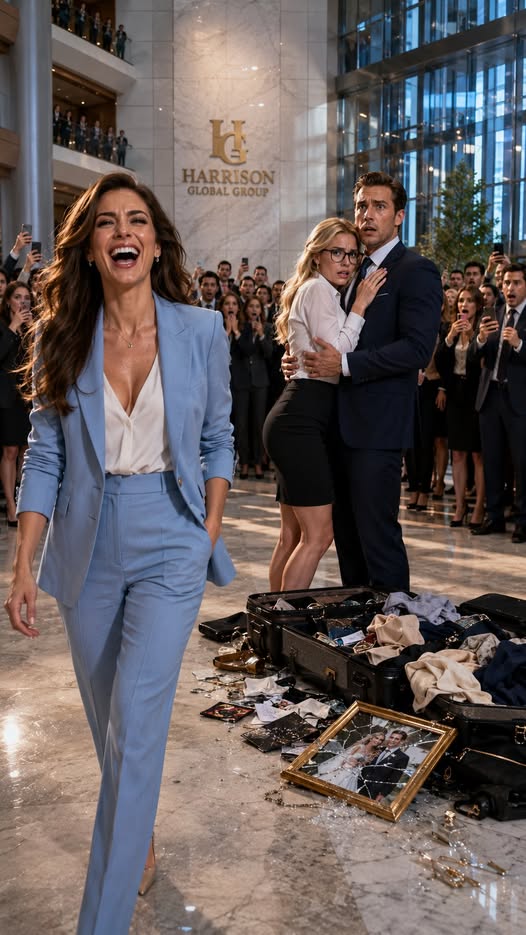
I pulled two massive, hard-shelled Rimowa suitcases from the dusty rafters. They were the luggage we had bought for a three-week tour of Tuscany five years ago. Now, they would serve as the aluminum caskets for a dead marriage.
I wheeled them silently into the expansive master closet, shutting the heavy mahogany door behind me. I turned on the dim recessed lighting.
I didn’t pack a single item of my own belongings. I belonged in this house. I had earned the mortgage. I had picked the tile. I had built the sanctuary. He was the trespasser.
I unzipped the first suitcase, the metallic sound hissing like a snake in the quiet closet.
I started with the armor. I pulled his custom-tailored suits from their velvet hangers. The charcoal Tom Ford. The navy pinstripe from Savile Row. The heavy tweed winter coats. I folded them with cold, mechanical precision, pressing them flat into the base of the luggage. Every jacket represented a promotion I had celebrated, a late night I had kept his coffee warm, a pep talk I had delivered when his confidence faltered.
Next came the shoes. I took his shined, oxblood leather oxfords, his Italian loafers, his running shoes, placing them into dust bags and wedging them along the edges.
My fingernails bit into my palms as I moved to his accessory drawer. This was the museum of his ego.
I grabbed the walnut watch winder holding his Rolex. I scooped up the engraved silver cufflinks I had purchased for our fifth anniversary. I took the heavy, crystal bottle of his signature cologne—the scent I used to press my face into when I hugged him, now utterly tainted by the phantom smell of cheap jasmine. I threw it all into the mesh compartments, the heavy items clattering against each other without care.
I packed his silk ties. His cashmere sweaters. His monogrammed gym bag. I dismantled the physical presence of Ethan Lawson piece by piece, wiping him from the shelves like chalk from a board.
My back ached. My eyes burned, bone-dry and gritty. The sheer, suffocating weight of moving a grown man’s existence into a confined space was physically exhausting. But a dark, pulsing adrenaline kept my hands moving.
Finally, I walked over to the small nightstand on his side of the bed.
Resting next to the brass reading lamp was a framed photograph. It was taken at his firm’s holiday gala three years ago. In the picture, I was wearing a stunning emerald gown. Ethan stood beside me, his arm wrapped tightly around my waist, his face pressed to my temple. He looked at me with such fierce pride in that frozen moment. He looked as though I was his entire world, as though I had always been, and would always be, enough.
I stared at the glass for a long time in the dim light.
I didn’t shatter it. I didn’t rip the photo from the frame.
I carried it into the closet and laid it gently face-up, right on top of his folded blue Oxford shirt.
I zipped the suitcases shut, clicking the heavy metal clasps into place. It was 4:15 in the morning. The house was dead quiet.
By 7:15 AM, the sun was beginning to burn off the Seattle fog. Ethan was still deeply asleep, oblivious to the fact that his closet was a hollow cave.
I dragged the heavy luggage down the stairs, the rubber wheels thumping a steady, rhythmic march against the hardwood. I hoisted them into the trunk of my Audi, the suspension groaning under the weight of fifteen years of accumulated ego.
I slid behind the steering wheel, my hands gripping the leather. I looked at myself in the rearview mirror. My hair was pulled back into a severe knot. My lips were painted a sharp, unapologetic red. I did not look like a victim. I looked like an executioner.
I put the car in drive and headed toward the glass tower.
Chapter 5: The Lobby Coup d’État
The Vanguard Tower loomed against the gray sky, a massive spire of steel and reflective glass located in the beating heart of the financial district.
I pulled my car into the temporary loading zone directly in front of the revolving glass doors. I didn’t care about the parking ticket. It was 8:15 AM. The building was at peak morning capacity.
I popped the trunk, hauled the two massive Rimowa suitcases onto the wet pavement, and extended the telescoping handles.
I walked through the automatic sliding doors, the heavy luggage trailing behind me with a low, authoritative rumble.
The lobby was a cavernous ecosystem of corporate ambition. It was alive with the chaotic symphony of a Tuesday morning: the sharp click of stiletto heels on Italian marble, the hiss of the barista’s espresso machine in the corner café, the low hum of a hundred different conversations about quarterly projections and market shares.
I walked straight through the center of it all with absolute, terrifying confidence. I didn’t shrink. I didn’t hurry. I had spent fifteen years helping build the financial security that allowed Ethan to strut through this exact lobby like a king. I had earned the right to occupy this space.
The receptionist at the sprawling security desk looked up, her polite, practiced smile faltering slightly at the sight of my luggage.
“Good morning,” she chirped cautiously. “Can I help you, ma’am?”
“I’m here to drop something off for Ethan Lawson,” I said, my voice projecting clearly over the din of the lobby.
Before the receptionist could ask for my identification or buzz up to the executive floor, my eyes scanned the crowd milling near the high-speed elevator banks.
And there she was.
Lila Parker.
She was standing in a small circle with two other junior employees, clutching an iced coffee. She wore a fast-fashion beige blazer, her company badge fastened neatly to the lapel. She threw her head back, laughing at something a coworker said, her dark hair catching the light. She looked impossibly young, unblemished by the heavy, complicated realities of adult consequences. She looked exactly like someone who believed she was starring in a romantic comedy, entirely unaware that the genre was about to violently shift.
I ignored the receptionist. I adjusted my grip on the luggage handles and marched directly toward the elevator banks.
The rumble of the heavy suitcase wheels across the marble floor began to draw eyes. Conversations near the security desk sputtered and died. The collective gaze of the Vanguard Tower lobby began to track my trajectory.
I stopped exactly three feet away from her.
“Lila?” I asked. My tone was conversational, polite, yet sharp enough to cut glass.
She stopped laughing. She turned to face me, her brow furrowing in mild confusion. Her eyes flicked from my face down to the massive suitcases, and back up again.
“Yes?” she asked, her voice light and questioning.
I held her gaze. I saw the exact second the calculation happened behind her eyes—the sudden, terrifying realization of who I was. The color instantly drained from her flushed cheeks, leaving her face a chalky, sickly white.
Without saying another word, I uncurled my fingers and let go of the handles.
The heavy aluminum bags tipped forward, leaning softly but heavily against her shins.
I took one step closer, invading her space, ensuring that my voice would carry through the rapidly quietening lobby. I stared directly into her panicked, widened eyes.
“Congratulations,” I said, my voice echoing off the polished stone walls. “He belongs to you now.”
Lila’s jaw fell open. The iced coffee in her hand trembled. The two coworkers beside her physically recoiled, stepping back as if the suitcases were live explosives.
A heavy, suffocating silence fell over the entire lobby. The hiss of the espresso machine stopped. The clicking heels ceased. Fifty pairs of eyes were locked onto the tableau.
At that exact, orchestrated second, a soft, melodic ding echoed through the space.
The brass doors of the executive elevator slid open.
Ethan stepped out into the stunned, breathless silence.
Chapter 6: The Resonance of Silence
Ethan was holding a steaming cup of dark roast, checking his phone, a smug, relaxed smile playing on his lips.
He took two steps out of the elevator before the oppressive silence of the room registered in his brain. He looked up.
His eyes found the crowd. Then they found Lila, trembling in her cheap blazer, pinned in place by the luggage of his entire existence.
Finally, his eyes met mine.
I watched a man’s soul leave his body in real time. The smug smile evaporated. The blood vanished from his face, leaving a gray, ashen mask of pure horror. His hand went slack.
The paper coffee cup slipped from his fingers, hitting the marble floor. The lid popped off, sending a splatter of dark brown liquid across the toe of his expensive leather shoe.
“Eleanor,” he breathed. It wasn’t a word; it was a surrender.
He took a step forward, his hand reaching out instinctively, a pathetic attempt to put the pin back into the grenade that had already leveled his life.
I didn’t wait for the excuse. I didn’t wait for the frantic, whispered pleas or the desperate attempts at damage control. I had delivered my message. The coup was complete.
I turned on my heel, presenting my back to my husband and his intern.
I walked out of the Vanguard Tower at the exact same measured, confident pace I had walked in. I pushed through the revolving glass doors and stepped out into the crisp, biting Seattle air.
As I unlocked my car and slid into the driver’s seat, my phone began to vibrate violently in my purse. Call after call from Ethan. Texts pleading for me to answer, begging for a conversation, swearing he could explain.
I powered the phone off and tossed it into the passenger seat.
Six months have passed since that morning in the lobby.
The divorce was swift and brutal. Miriam Vance lived up to her reputation, securing my financial independence and ensuring I kept the house on Mercer Island. Ethan did not fight her. He had no leverage, and the sheer, public humiliation of the drop-off had fractured his spirit.
Corporate gossip is a lethal, fast-moving virus. By noon that day, everyone from the mailroom to the board of directors knew that Ethan Lawson’s wife had delivered his life to the marketing intern. The embarrassment was too much for the firm’s conservative partners. Ethan’s promotion was quietly rescinded. A month later, he requested a transfer to a smaller, less prestigious branch in Denver, desperate to escape the smirks and whispers in the breakroom.
Lila Parker did not follow him to Colorado. She quit her internship three days after the lobby incident, citing an uncomfortable work environment. She learned very quickly that the fantasy of stealing a powerful man is much more glamorous than the reality of washing his laundry.
I am sitting on the back patio now, a mug of Earl Grey tea warming my hands. The Seattle rain has finally cleared, leaving the air smelling of wet pine and clean soil.
Sometimes, in the quiet moments before sleep, I think about that icy blue Oxford shirt. I think about the panic I felt when the scent of cheap jasmine first hit my lungs.
For a long time, I thought the affair was a reflection of my inadequacy. But sitting here, breathing in the cold, unburdened air, I know the truth. Ethan’s betrayal was not about what I lacked; it was entirely about what he couldn’t carry. He couldn’t carry the weight of a true partnership. He wanted a fan, an audience member, someone who would look at him with unearned awe rather than the knowing eyes of an equal.
I did not give him the explosive collapse he was waiting for. I did not break.
I simply packed up the life he no longer deserved, handed it over to a stranger, and finally, for the first time in fifteen years, kept the best parts of myself for me.