Chapter 1: The Weight of a Key
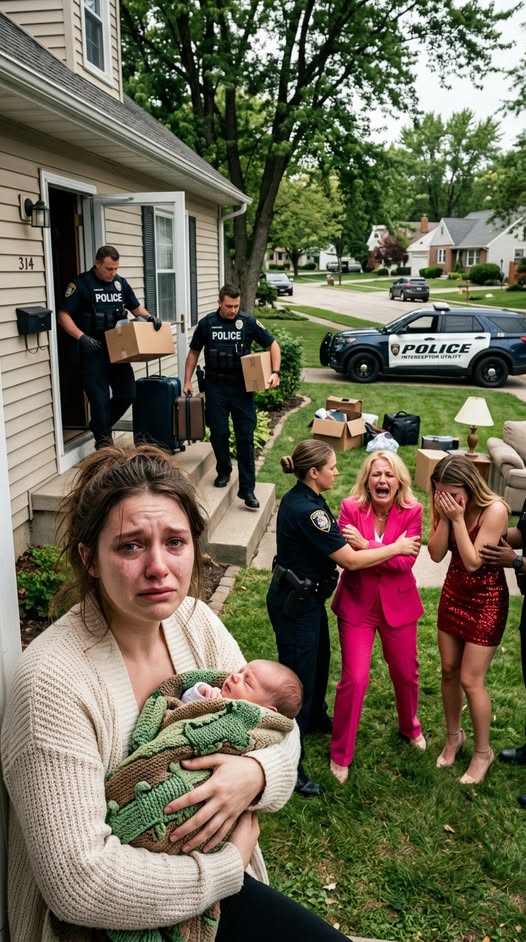
The first night I slept in the house that was finally mine, the air didn’t smell like grief; it smelled of fresh white paint and the faint, sweet scent of lemon blossoms drifting in from the yard. I was thirty-two years old, a widow of four months, and a mother of three weeks. My body felt like a map of recent battles—the jagged, stinging line of my C-section incision pulsed with every breath, a physical reminder of the day Emilia entered a world her father would never see.
I sat on the edge of the mattress in the smaller of the two bedrooms, cradling my daughter. The house in Tlaquepaque was small, a modest blue structure with a flat roof and a heavy iron gate, but to me, it was a fortress. It was bought with the life insurance policy Andrés had left behind after that rain-slicked highway took him from us. Before he died, he had held my hand in our cramped rental and whispered, “Lucía, promise me you won’t let them swallow you. Get a place where the sun hits the floor. A place for the baby to grow.”
He knew my family. He knew the way my mother, Doña Rosa, viewed my life not as a person’s journey, but as a resource to be mined.
That evening, I had finally done it. I had stood at the gate and placed two names on the mailbox in neat, black lettering: Lucía Reyes and Emilia Reyes. I cried then, the tears hot and fast, because for the first time in my life, there was no man to tell me where to sit and no mother to tell me what to think.
The silence was broken at 9:00 PM by the sharp, rhythmic trill of my phone. I didn’t even have to look at the screen to know who it was. The vibration felt like a predator scratching at the door.
“Hello, Mom,” I said, my voice thin.
“Lucía,” Doña Rosa barked. There was no ‘how are you,’ no ‘how is the baby’s fever.’ “I’ve been talking to your sister. Maribel is leaving that damp apartment. The landlord is a thief, and she can’t stay there with the children. We’ve decided. We’re moving into the blue house tomorrow morning. Get the spare room ready. You’ll need to move your things into the living room so the boys have space.”
The room seemed to tilt. My mother didn’t ask; she colonized. This was the woman who had spent my childhood telling me I was “lucky” she let me eat at her table.
“No, Mom,” I said. My heart hammered against my ribs like a trapped bird. “I just gave birth. My stitches are still healing. Emilia and I need peace. We need to find our own rhythm.”
There was a pause, heavy and cold. “Peace?” she laughed, a sound like dry glass breaking. “Family is peace, Lucía. Family helps family. You have two rooms. You are one person and a silent infant. It is selfish to sit in a mansion while your sister’s children sleep in a basement. You only have that house because Andrés died. It is blood money. It belongs to the family.”
“It belongs to his daughter,” I whispered, my grip tightening on the phone. “You are not coming in, Mom. Don’t come tomorrow.”
“We will be there at eight,” she snapped. “Don’t be ungrateful. You’ve always been the difficult one, but I won’t let you ruin this for Maribel.”
She hung up. I looked down at Emilia, who was fast asleep, her tiny chest rising and falling in perfect, rhythmic innocence. A cold dread settled over me, but beneath it, something else was flickering—a spark of the fire Andrés had always seen in me. I reached for my bedside table and pulled out the thick blue folder containing the deed. I didn’t call my mother back. Instead, I called Esteban, Andrés’s older brother.
Esteban was a man of few words and many laws. He had been a high-ranking attorney for years, and he had loved Andrés with a fierce, quiet loyalty.
“Esteban,” I said when he answered. “She’s coming. She says she has a right to the blood money.”
“I’m already in the car, Lucía,” he replied, his voice a low, steady rumble. “I knew this day would come the moment the ink dried on the house title. Sleep if you can. I’ll be there before the sun.”
I didn’t sleep. I sat by the window, watching the streetlamps flicker, wondering if a house could truly be a home if the ghosts of the living were already trying to haunt it.
Chapter 2: The Siege of Tlaquepaque
The sun had barely begun to bleed gold over the rooftops of Tlaquepaque when the sound of engines disturbed the morning bird-song. I stood behind the curtains, clutching a cup of lukewarm tea. Three cars—my mother’s battered sedan, Maribel’s van, and my brother Tomás’s truck—pulled up to the curb like a small, invading army.
They didn’t knock. They began unloading.
I watched as Tomás hauled a massive flat-screen television toward my gate. Maribel was directing her two sons to carry bags of clothes, their faces sticky with breakfast jam. And there, standing in the center of the chaos like a general, was Doña Rosa. She wore her best Sunday shawl, the one she used when she wanted to look like a martyr.
I felt a wave of nausea. My stomach burned where the doctor had sliced me open, but I forced myself to stand tall. I walked to the front door, but I didn’t open it all the way. I engaged the heavy security chain Andrés had insisted on installing months before he died.
I heard the gate click. Doña Rosa walked up the path, her heels clicking on the stone. She didn’t look at the flowers I had planted. She looked at the door.
“Lucía! Open up! The boys are tired, and the truck is idling!” she shouted.
I opened the door six inches, the chain tensing between the frame and the wood. “I told you last night, Mom. You cannot stay here. Take the bags back to the cars.”
My mother’s face shifted instantly. The martyr mask dropped, revealing the iron beneath. “Don’t play games with me, girl. I am your mother. I have the right of way in your life. Now, open this door before I make a scene the neighbors will never forget.”
“I’m not playing,” I said, my voice trembling but holding. “This is my home. It is private property.”
Doña Rosa reached into her purse with a triumphant smirk. “Property? I have a key, Lucía. I took it from your purse at the funeral. I knew you’d be too hysterical to manage a household alone.”
She thrust a silver key into the lock. My heart dropped into my throat. I hadn’t realized she had stolen a spare. I heard the mechanism tumble. The bolt slid back. She pushed the door with all her weight, expecting it to fly open.
It slammed against the security chain with a violent thud.
“What is this?” she screeched, shoving the door again. “Lucía, remove this chain this instant!”
“I’m afraid she won’t be doing that, Mrs. Rosa.”
The voice came from behind me, but it wasn’t mine. It was deep, resonant, and carried the weight of a courtroom. Esteban stepped into the hallway from the kitchen, looking immaculate in a charcoal suit despite the early hour. He held a leather briefcase in one hand and a high-end digital camera in the other.
Behind him, two uniformed police officers stepped into view from the shadows of the dining room.
“Good morning,” Esteban said calmly, holding the camera up to record the scene through the gap in the door. “My name is Esteban Reyes. I am the legal representative for the estate of Andrés Reyes and the personal counsel for Lucía Reyes. You are currently attempting to gain unauthorized entry into a private residence using a stolen key. This is being recorded, and the officers are here to witness your next move.”
The silence that followed was absolute. Outside, the children stopped running. Tomás dropped a box of kitchenware. Doña Rosa stared through the gap, her eyes wide with a mixture of shock and incandescent rage.
“You…” she hissed at me, ignoring Esteban. “You brought the law into our family? You would put your mother in handcuffs over a room?”
“I am protecting my daughter’s inheritance,” I said, my voice finally finding its strength. “Go home, Mom. Or don’t. But you aren’t staying here.”
The police officer, a tall man with a tired expression, leaned forward. “Ma’am, the owner has asked you to leave. If you attempt to force the door again, we will have to escort you to the station. Please, take your family and go.”
Doña Rosa backed away, her face twisting into something unrecognizable. “You think you’ve won, Lucía? You think this lawyer can protect you from the truth? Everyone in this town will know what you are. A daughter who leaves her family in the street while she hides in a dead man’s house. You’ll be alone. And when you need us—and you will need us—don’t look for me.”
She turned and marched toward the cars, shouting at Maribel and Tomás. They scrambled to reload the bags, casting dirty looks at the windows. As the cars roared away, leaving a cloud of exhaust over my blue gate, I slumped against the wall, my legs giving out.
Esteban reached down and caught my arm. “It’s not over, Lucía,” he said softly. “A woman like that doesn’t retreat. She only changes her weapon.”
He was right. I thought I had defended my home, but the real war hadn’t even begun.
Chapter 3: The Poison in the Well
For three weeks, the blue house was a tomb. I didn’t go out. I couldn’t.
Doña Rosa had started a campaign of psychological attrition. Every time I checked my phone, there were messages. Not just from her, but from cousins I hadn’t spoken to in years. “How could you?” “Your mother is crying every night.” “Andrés would be ashamed of your greed.”
Maribel was worse. She posted photos on social media of her children sleeping on a thin mattress on the floor of her apartment, with captions like: “Some people have mansions, but no heart. We have nothing, but we have each other.”
The local market, where I used to buy my fruit, became a gauntlet. The vendors who had known me since I was a child looked away when I passed. I heard the whispers. “That’s the Reyes girl. The one who called the police on her own mother. Money changes people, doesn’t it?”
I felt the walls of the house closing in. I started to doubt myself. Was I the monster they said I was? Was a spare bedroom worth the soul of my family?
One Tuesday, Emilia woke up with a dry, barking cough. By noon, her forehead felt like a hot stone. I panicked. I was a new mother, exhausted and isolated. I called the pediatrician, who told me to bring her to the emergency room immediately.
I drove to the hospital with my hands shaking so hard I could barely grip the steering wheel. As I sat in the waiting room, clutching Emilia to my chest, the sliding doors opened.
I expected to see a doctor. Instead, I saw Doña Rosa and Maribel.
They were dressed in muted, somber tones, looking every bit the concerned relatives. They didn’t come to me; they went straight to the nurses’ station.
“We’re here for Emilia Reyes,” I heard Doña Rosa say, her voice loud enough for the whole room to hear. “We’re her family. Her mother isn’t… well. She’s been very unstable since the husband died. We’re worried she’s neglecting the child.”
I stood up, my stitches screaming in protest. “What are you doing here?”
Doña Rosa turned, her eyes swimming with fake tears. “Oh, Lucía! Thank God you’re here. We heard the baby was sick. We’ve been so worried about your mental state. You haven’t been yourself, darling. Shutting yourself away, acting paranoid…”
A woman in a professional blazer stepped out from the inner offices. She held a clipboard and looked at me with a clinical, unblinking gaze.
“Ms. Reyes? I am Sofia Mendez, a social worker with the DIF (National System for Integral Family Development). We received an anonymous report this morning regarding the welfare of your child. Given that you are here at the hospital, and given the… concerns raised by your family, we need to conduct an immediate interview.”
My world shattered. They hadn’t just come to harass me. They had come to take my daughter.
“She’s sick!” I cried, gesturing to the limp baby in my arms. “I brought her here because I’m taking care of her!”
“A mother who is mentally unstable often uses the child’s health to seek attention,” Maribel whispered to the social worker, loud enough for me to hear. “She hasn’t let us see the baby in a month. She’s kept her a prisoner in that house.”
The social worker nodded slowly. “Ms. Reyes, please come with me. Your mother and sister have offered to take temporary custody of the child while we evaluate your living situation and mental health.”
I looked at my mother. Behind the feigned concern, she was smiling. It was a small, cruel twitch of the lips. She had found a way into the house. She was going to use Emilia as the key.
“No,” I whispered. “No, you don’t touch her.”
“Ms. Reyes, don’t make this difficult,” the social worker warned. “Your behavior right now is only confirming the report.”
I was trapped. I was a grieving widow with no witnesses, standing against a mother who had spent forty years perfecting the art of the lie. I looked at the exit, then at the social worker, and I felt the darkness of the trap closing over my head.
But then, the hospital’s automatic doors hissed open again.
Chapter 4: The Ghost’s Defense
Esteban didn’t walk; he strode. He looked like a man who had been expecting a fight and was disappointed it had taken this long to start. He wasn’t alone. Beside him was an older woman I recognized—Mrs. Eulalia, my neighbor from the blue house.
“The mother will not be surrendering the child,” Esteban announced, his voice cutting through the hospital’s hum like a blade.
The social worker frowned. “And who are you?”
“I am the legal guardian of the child’s interests, as appointed by Andrés Reyes in a notarized document six months before his passing,” Esteban said, pulling a sheaf of papers from his bag. “And I am here to report a case of malicious fraud and harassment against my client.”
Doña Rosa blanched. “This is a family matter, Esteban! Stay out of it!”
“It became a legal matter when you filed a false report with the DIF,” Esteban replied. He turned to the social worker. “This is Mrs. Eulalia. She lives next door to my client. She has been checking on Lucía every day. She has seen the baby well-fed, the house clean, and the mother attentive. She is also the one who witnessed these two women attempting to break into the home three weeks ago.”
Mrs. Eulalia stepped forward, her face set in a stern mask. “I saw it all. Those women were shouting like demons at a saint. Lucía is a good mother. She’s just a mother who said ‘no’ to a bully.”
The social worker’s expression shifted from suspicion to doubt. “I see.”
“There’s more,” Esteban said. He handed me a small, silver USB drive. “Lucía, I didn’t want to give you this yet. I thought you needed time. But I think you need his voice more than you need time.”
I looked at the drive. “What is it?”
“Andrés knew,” Esteban whispered. “He knew his mother-in-law would see his death as an opportunity. He recorded a series of videos for the bank and for the estate. And one for you.”
The social worker agreed to wait while the doctors treated Emilia’s croup. We were moved to a private room. Doña Rosa and Maribel were told to stay in the waiting area, though I could hear my mother’s muffled shouts through the walls.
I plugged the drive into Esteban’s laptop.
The screen flickered to life. There was Andrés. He looked tired, his hair messy, sitting in the office of his construction site. He looked into the camera and smiled that lopsided smile that had always made me feel safe.
“Hey, Lu,” he said. His voice was a ghost, but it was a warm one. “If you’re watching this, it means I’m not there to hold the door shut. I’m sorry for that. I’m so sorry I left you with them.”
He took a breath. “I’m making this video to be used as evidence if they ever try to claim you’re unfit. I’ve documented every time your mother asked me for money and threatened to ‘turn you against me’ if I didn’t pay. I’ve kept the ledgers. Esteban has them. But more importantly, Lu… you have to remember who you are. You aren’t just Rosa’s daughter. You are the architect of your own life. Don’t let her take the roof from over your head. You are Emilia’s home first. You owe no one your life.”
I sobbed, burying my face in my hands. The sound of his voice was like water in a desert.
“There are recordings of phone calls, too,” Esteban said. “Andrés recorded your mother threatening to ‘make your life a living hell’ if he didn’t put the house in Maribel’s name. It’s all here. The motive for the false report is clear: it’s not concern for the baby. It’s a ransom demand for the house.”
The social worker, who had been watching the video, looked pale. “This is… extremely serious. Filing a false report to gain leverage in a property dispute is a criminal offense.”
I looked at the door. I could see the shadow of my mother pacing in the hallway. I felt a cold, sharp clarity wash over me. The grief was still there, but the fear was gone.
“I want to see her,” I said. “I want to see them both. Now.”
Chapter 5: The Reckoning
The meeting took place in a small, sterile conference room in the hospital’s administrative wing. The air smelled of industrial lemon and tension.
On one side sat Doña Rosa and Maribel. My mother was still trying to maintain the act, her handkerchief pressed to her eyes. Maribel looked nervous, her eyes darting toward the door.
On the other side sat Esteban and me. I held the blue folder in my lap. Emilia was sleeping in her carrier at my feet, her breathing finally clear after the nebulizer treatment.
The social worker sat at the head of the table.
“We have reviewed the evidence provided by Mr. Reyes,” she began. “Including the testimonial from the neighbor and the… digital records left by the deceased.”
Doña Rosa sniffed. “Andrés was a troubled man. He was always trying to drive a wedge between a mother and her child.”
“Enough, Mom,” I said. The word was a gunshot.
She stopped mid-sniff, her eyes snapping to mine.
“You did this because you wanted the house,” I said, my voice leveled and low. “You didn’t care if I was recovering from surgery. You didn’t care if the baby had a roof. You wanted a place for Maribel so you wouldn’t have to listen to her complain anymore. And you were willing to let the state take my daughter to get it.”
“I did it for the family!” she screamed, slamming her hand on the table. “You have everything! You have his money, his house, his child! What does Maribel have? What do I have?”
“You have the consequences of your actions,” Esteban interjected. He pushed a document across the table. “This is a formal restraining order. Based on the evidence of the attempted break-in and the documented history of harassment, you are barred from coming within one hundred meters of the blue house or Lucía’s place of employment. If you contact her via phone or social media, or if you encourage others to do so, you will be in violation of a court order.”
Maribel gasped. “You’re banning your own mother from her granddaughter’s life?”
“No,” I said, looking my sister in the eye. “She banned herself the moment she lied to the police. But you, Maribel… you’re the one who told the social worker I was neglecting the baby. You’re the one who posted those lies online.”
Maribel looked down at her hands. “Mom said… Mom said it was the only way to get you to listen. She said you were being brainwashed by Esteban.”
“Mom says a lot of things,” I said. “But from now on, you won’t be here to hear them. The DIF is filing a counter-report. Your names are being flagged for malicious reporting. If you ever try this again, you won’t just be barred from my house. You’ll be in a cell.”
The social worker stood up. “I think we’re finished here. Ms. Reyes, your daughter is cleared to go home. Mrs. Rosa, I suggest you leave before I call security to escort you out.”
Doña Rosa stood up, her face a mask of pure, unadulterated hatred. She didn’t look like a mother. She looked like a stranger.
“You think you’re so high and mighty,” she hissed. “But you’ll wake up one day and realize you have no one. No one but a cold house and a child who will grow up to hate you just as you hate me.”
“I don’t hate you, Mom,” I said, and for the first time, I realized it was true. “I just don’t belong to you anymore.”
She turned and marched out, Maribel trailing behind her like a shadow.
When the door closed, the silence was different. It wasn’t the heavy, suffocating silence of the last month. It was the silence of a fever breaking.
Chapter 6: The Lemon Tree
Six months later, the blue house looked different. I had painted the gate a brighter shade of azure, and the lemon tree in the yard was heavy with fruit.
It was Emilia’s first birthday—or at least, the first one we were celebrating with friends. It had been a year since we moved in. The house was full of people, but they weren’t the people who shared my blood.
Mrs. Eulalia was there, bringing her famous tamales. Esteban was at the grill, arguing with a neighbor about the best way to char corn. There were friends from the local library and a few other young mothers I had met at the park.
We had placed a small table under the lemon tree. On it was a cake with a single candle and a framed photograph of Andrés. He was laughing in the photo, his eyes crinkled at the corners.
I stood on the porch, watching the scene. My stomach no longer hurt; the scar had faded to a thin, silver line.
Esteban walked over, handing me a glass of cold hibiscus water. “Quiet day,” he noted.
“The best kind,” I replied.
I hadn’t seen my mother or sister since that day at the hospital. I heard through the grapevine that Maribel had finally found a job and moved to a different part of the state. Doña Rosa was still in the same house, still telling anyone who would listen about her “ungrateful” daughter, but the audience was shrinking. People in Tlaquepaque had long memories, and they knew who had stood their ground and who had tried to burn it down.
I walked to the mailbox at the end of the driveway. The letters I had put there a year ago—Lucía Reyes and Emilia Reyes—had faded a bit in the sun. I took out a permanent marker and traced over them, making the lines thick and bold.
“Nobody can chase us away here, my love,” I whispered, though Emilia was too busy trying to eat a handful of grass to listen. “Here, we learned to stay.”
I looked up at the sky. It was a clear, brilliant blue, the exact same color as my house. I finally understood what Andrés had meant. A home isn’t just walls and a roof. It’s the boundary you draw around your soul. It’s the place where you decide that your life belongs to you, and no one else.
As the sun began to set, casting long, golden shadows across the grass, I felt a sense of peace so profound it almost hurt. I was a widow. I was a single mother. I was a daughter of a broken family. But as I watched my daughter laugh in the light of her first birthday candle, I knew I was also something else.
I was free.
If you want more stories like this, or if you’d like to share your thoughts about what you would have done in my situation, I’d love to hear from you. Your perspective helps these stories reach more people, so don’t be shy about commenting or sharing.