Chapter 1: The Price of the Perfect Picture
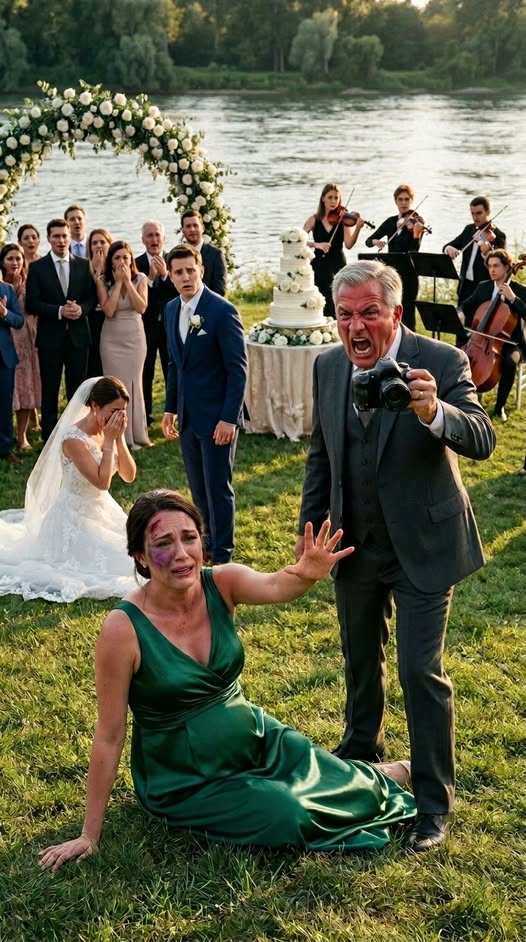
By the time my younger sister’s wedding day dawned, thick with the humid, Spanish-moss-draped air of Savannah, Georgia, I had already bankrolled the entire illusion.
The sprawling riverside venue at the Magnolia Estate. The thousands of white roses flown in overnight from a boutique nursery in California. The Juilliard-trained string quartet. The award-winning photographer. Even the absurdly decadent five-tier cake that my sister, Vanessa Hale, had thrown a tearful tantrum over because the baker initially suggested real orchids instead of hand-spun sugar ones.
I paid for all of it. Sixty-one thousand, eight hundred and forty-two dollars.
I paid it because she was my little sister. I paid it because my mother had spent my entire life conditioning me to believe that family absorbed each other’s burdens without question. And perhaps, deep down, I paid it because my own future had recently been burned to the ground, and funding someone else’s happiness felt like a temporary anesthetic.
I was twenty-eight years old, seven months pregnant, and entirely alone.
The father of my child, Daniel Brooks, was killed in a multi-car pileup on Interstate 16 before I even had the chance to show him the two pink lines on the plastic stick. I was navigating the suffocating, twin horrors of profound grief and impending motherhood.
But three days before Vanessa was scheduled to walk down the aisle I had rented for her, my mother, Eleanor Hale, summoned me to her kitchen.
She stood by the marble island, meticulously arranging a fruit bowl, completely unwilling to meet my gaze. “Emily,” she murmured, her tone painfully casual. “We’ve decided it’s best if you don’t attend the ceremony on Saturday.”
I sat in one of the barstools, my hand resting instinctively on the heavy, high curve of my stomach. “Excuse me?”
My father, Robert Hale, loomed near the stainless-steel refrigerator, a sentinel of suburban respectability. His arms were crossed over his chest. “People will talk, Emily,” he stated, his voice flat and uncompromising. “You walking down that aisle with that belly, unmarried, looking like a tragedy… it will humiliate this family. It sets a terrible tone for your sister’s new beginning.”
I looked at Vanessa, expecting her to leap to my defense. After all, I had just wired the final payment for her open bar. Instead, she stared intensely at her three-carat diamond engagement ring, twisting it around her finger.
“It’s just one day, Em,” Vanessa whispered, refusing to look up. “Please don’t make this about you. I just want my photos to be perfect.”
So, on the morning of her meticulously funded dream, I remained in my cramped apartment. I wore oversized gray sweatpants, drinking decaf tea, staring blankly at the thick manila folder of receipts that proved I had engineered the very event I was deemed too shameful to attend.
At exactly 1:17 p.m., my phone buzzed against the coffee table.
It was Vanessa.
I answered, expecting a belated, guilt-ridden apology. Instead, her voice pierced my ear, sharp and hyperventilating. “Emily! Oh my God, Emily, my ring. I left the wedding band. It’s in the blue velvet box on my dresser at the house.”
I sat perfectly still, listening to the frantic rustle of silk through the receiver.
“You need to bring it,” she demanded, the panic morphing instantly into entitlement. “Now. They’re seating the guests.”
For a fraction of a second, a dry, bitter laugh caught in my throat. I was far too shameful to be seen in the background of her photographs, but I was not too shameful to act as her emergency courier.
Tell her no, a rational voice in my head pleaded. Let her get married without a ring.
But a lifetime of conditioning is a heavy chain to break. “I’ll find it,” I muttered, ending the call.
I retrieved the blue velvet box from my parents’ empty house and drove across town toward the river. My hands trembled against the leather steering wheel. I promised myself I would hand the box to the first bridesmaid I saw near the valet stand, turn around, and disappear back into my exile.
But when I pulled up to the wrought-iron gates of the estate, there were no bridesmaids waiting. The courtyard was completely deserted.
The ceremony had already begun.
Chapter 2: The Erased Sister
I stepped out of my sedan, the oppressive Georgia heat instantly clinging to my skin. The air smelled of expensive perfume, damp earth, and crushed magnolias.
I clutched the small velvet box in my palm and hurried along the perimeter of the manicured lawn. Faint, elegant notes of a cello drifted through the ancient oaks. As I rounded the corner of the grand hedges, the entire tableau stretched out before me.
Two hundred guests sat in perfectly aligned white Chiavari chairs, facing the shimmering expanse of the Savannah River. At the end of a white rose-petal runner stood Vanessa, pale and visibly frantic, holding the hands of her groom, Aaron Coleman. The officiant was speaking, but Vanessa’s eyes were darting wildly toward the back of the lawn.
She was looking for me.
Taking a shallow breath, I stepped onto the stone path that bordered the seating area. I didn’t walk down the aisle. I stayed on the absolute fringe, raising my hand slightly to catch the eye of a groomsman, hoping someone would quietly jog over to retrieve the box.
I held the blue velvet square up into the sunlight.
That was the exact moment my father turned his head and saw me.
I expected a flash of embarrassment. I expected him to quickly wave me off, or dispatch someone to intercept me to preserve his pristine optics.
What I saw on Robert Hale’s face was not embarrassment. It was pure, unadulterated rage.
The veins in his neck pulled taut. His face flushed a dark, dangerous crimson. I had dared to puncture his carefully constructed illusion. The pregnant, widowed daughter had brought her shame into the light.
He didn’t hesitate. He shoved past two elderly guests in the back row, his heavy footsteps crunching violently against the gravel as he stormed directly toward me.
“What the hell are you doing here?” he hissed, his voice a venomous, guttural scrape that barely stayed beneath the volume of the string quartet.
“I brought the ring,” I stammered, instinctively taking a step backward.
“You were explicitly told to stay away.”
“Dad, the ceremony is happening, she needs—”
He didn’t let me finish.
Next to us, the hired photographer had temporarily set his heavy, secondary DSLR camera on a high cocktail table to change a lens.
My father lunged, his large hand wrapping around the thick canvas strap of the camera.
Before my brain could even process the physics of his movement, he swung the heavy magnesium-alloy body of the camera through the humid air.
He swung it like a weapon.
Chapter 3: Blood on the White Aisles
The camera smashed against the left side of my head, just above my temple, with a sickening, hollow crack.
The world instantly flashed a blinding, terrifying white.
Gravity vanished. The ground rushed up to meet me. I collapsed onto my knees, the jagged edges of the stone pathway tearing through my sweatpants. My right hand instinctively flew to my temple, while my left arm wrapped fiercely, desperately around my swollen stomach, attempting to shield my unborn child from the violent shockwave rocketing through my nervous system.
And then, from a few rows away, a woman’s voice tore through the heavy air.
“Stop! My God, everyone saw that!”
For five agonizing seconds, the universe simply stopped spinning.
The music died a horrific death, the cellist’s bow violently slipping across the strings with a high-pitched screech. Then came the gasps. They were sharp, scattered, and horrified, rippling through the meticulously dressed crowd like shards of broken glass.
I knelt on the stones, my vision swimming in dark, fuzzy spots. Warm, thick blood rushed down the side of my face, slipping between my trembling fingers and dripping onto the pristine white gravel.
My father stood directly over me, his chest heaving, his fist still tightly gripping the broken camera strap. The heavy lens dangled near his slacks.
“You shouldn’t have come,” he sneered.
His voice was low, but in the dead silence of the garden, it carried. The photographer heard it. The entire back row of guests heard it.
Vanessa stood frozen at the altar, her lips parted in a silent scream. Aaron, the groom, dropped her hands, staring at my father as if a demon had just unzipped a human suit in the middle of his wedding.
A woman in the second row abruptly stood up, her folding chair clattering backward onto the grass. It was Aaron’s mother, Patricia Coleman, a retired trauma nurse with silver hair and a spine made of tungsten.
“Call 911!” Patricia roared, her voice cutting through the paralysis of the crowd. “Someone get an ambulance here right now!”
My mother finally moved. Eleanor Hale rushed down the aisle, her expensive heels sinking into the grass.
But she didn’t run to me. She didn’t drop to the ground to check if her pregnant daughter’s skull was fractured.
She ran straight to my father.
“Robert,” she whispered frantically, reaching out to pry the camera from his rigid grip. “Give me that. Put it down.”
Watching my mother protect my attacker broke something fundamental inside my chest. It wasn’t the searing pain in my head. It wasn’t the paralyzing fear for my baby. It was a structural beam of my own identity, a desperate need for their love that had been warped and bent for decades.
Right there, bleeding on the stones, it snapped clean in half.
I slowly turned my head, fighting the intense vertigo, and looked directly at the altar.
“You called me,” I said. My voice shook, but the acoustics of the silent garden carried every syllable. “You told me to bring your ring, Vanessa.”
Vanessa’s eyes welled with frantic tears, but her mouth remained sealed shut.
Aaron turned to his bride, his face pale. “You called her?”
“She… she had the ring,” Vanessa whimpered.
“You looked me in the eye this morning and told me Emily chose not to come,” Aaron said, his voice dropping an octave.
A low, buzzing murmur rippled through the two hundred guests.
My father pointed a trembling, accusatory finger at me. “She’s unstable! She came here to ruin your wedding!”
I laughed. It sounded wet, broken, and completely unhinged.
“I paid for it,” I gasped, wiping the blood from my jawline.
The murmur vanished, replaced by an absolute, suffocating vacuum of sound. Vanessa’s face drained of all color, turning the exact shade of her imported gown.
My fingers scrabbled blindly into the grass until I found the blue velvet box. It had popped open when I fell. The diamond wedding band sat nestled in the silk, completely untouched.
“I paid for this venue,” I stated loudly, my words slurring slightly but undeniably clear. “I paid for the food. I paid for the California roses. I paid for the photographer whose equipment my father just used to bash my head in. I paid for every single chair every person here is sitting on.”
Aaron turned slowly back to Vanessa. He looked at her as if she were a total stranger. “Is that true, Vanessa?”
She didn’t answer. She just wept.
That was answer enough.
The wail of police sirens bled into the air long before the ambulance arrived. By the time the flashing lights breached the gates, Patricia Coleman was kneeling beside me on the gravel, pressing a clean, folded linen napkin against my temple.
“Are you cramping, honey?” Patricia asked, her eyes scanning my face with clinical intensity. “Any fluid? Any pain in your lower back?”
“No,” I whimpered, the adrenaline finally crashing, leaving behind cold, unadulterated terror. “But she isn’t moving. The baby isn’t moving.”
Two Savannah police officers separated my father from the horrified crowd, backing him toward a patrol car. My mother trailed behind them, her hands fluttering helplessly. “Please, officers, this is a private family matter,” she begged, as if the phrase could somehow scrub the blood out of the gravel.
But the photographer had already popped the memory card out of his shattered camera. And three rows back, one of Aaron’s teenage cousins had been filming the bride’s entrance on her iPhone. She had captured every single frame of the assault.
As the paramedics lifted me onto the rolling stretcher, Vanessa finally descended from the altar and jogged over. She looked down at me, her mascara running in dark, selfish rivers.
“Emily,” she hissed quietly. “Please. Just tell them it was an accident. Don’t do this today. Don’t ruin my life.”
I looked at her. I didn’t see a bride in distress. I saw the parasite that had fed on my grief.
“Enjoy your wedding, Vanessa,” I whispered as the paramedics locked the stretcher rails into place. “Assuming there’s still one to attend.”
The heavy metal doors of the ambulance slammed shut, cutting off the sunlight, and trapping me alone with the terrifying, suffocating silence inside my own womb.
Chapter 4: The Rhythm of Survival
The ride to Memorial Health was a blur of bright overhead lights and clipped, professional voices. The noise of the wedding—the gasps, the cello, my mother’s pathetic excuses—vanished, replaced entirely by the low hum of the ambulance tires and the medic frantically checking my vitals.
“Emily,” the paramedic asked, shining a penlight into my uninjured eye. “Nausea? Dizziness?”
“Both,” I breathed. “But my stomach… I can’t feel her. Please.”
I had survived burying Daniel. I had survived sitting absolutely alone in the front pew of his funeral while my mother leaned over and whispered that it was a blessing we hadn’t spent money on a wedding before he died. I had survived my father telling me my pregnancy was a monument to my own poor choices.
I did not know how to survive a silent womb.
When they wheeled me into the trauma bay, the world accelerated. A doctor began assessing the gash on my temple, calling for a CT scan. A labor and delivery nurse immediately pulled my sweatpants down and squirted cold, blue gel across my swollen belly.
She pressed the Doppler wand firmly into my skin.
For ten excruciating, eternal seconds, there was nothing but the hollow, static hiss of the machine.
I squeezed my eyes shut, preparing to die from the inside out.
And then, it came.
Thump-thump-thump-thump-thump.
It was rapid, furious, and overwhelmingly loud. It was a strong, steady, galloping rhythm of absolute defiance. She was alive.
I turned my head into the sterile pillow and sobbed with a violence that made my chest ache. The nurse gently placed her gloved hand over mine. “Baby sounds perfect, mama,” she smiled softly. “She’s just fine.”
Two hours later, after the CT scan confirmed a mild concussion and I had received six stitches near my hairline, the heavy wooden door to my room swung open.
A uniformed officer walked in. His badge read Officer Bennett. He had deeply lined eyes and the exhausted posture of a man who had already listened to three different people lie to him that afternoon.
“Ms. Hale,” Bennett said gently, removing his hat. “Your father is currently in custody at the precinct. We have high-definition video footage of the incident from a guest, as well as multiple witness statements.”
I lightly touched the thick gauze taped to my head. “What happens now?”
“That depends largely on your cooperation. Your mother has provided a statement claiming you tripped and fell into the camera. But based on the footage, the district attorney is not treating this as an accident.”
I closed my eyes. I could hear my mother’s voice echoing in my subconscious. Don’t exaggerate, Emily. Don’t embarrass the family name. Think of Vanessa’s future.
Then, I felt a sharp, definitive kick against my ribs.
“I want to give a full statement,” I said, my voice remarkably steady.
Officer Bennett clicked a small digital recorder on.
I didn’t just tell him about the swing of the camera. I pulled the entire toxic root system out of the ground. I told him about the kitchen meeting. About the explicit banishment from the venue. About the frantic phone call demanding the ring. And I told him about the sixty-one thousand dollars I had paid because I was conditioned to believe love was synonymous with financial sacrifice.
“Do you have proof of these payments, Ms. Hale?” Bennett asked.
A ghost of a smile touched my lips. “I have a digitized folder of every single receipt.”
My best friend, Maya, burst through the hospital room door just as the sun began to set over Savannah. She was carrying a tote bag with a phone charger, clean pajamas, and the expression of a woman fully prepared to commit arson.
She hugged me with terrifying gentleness. “I saw the video,” she whispered.
My stomach clenched. “It’s online?”
“Aaron’s teenage cousin posted it to TikTok before Patricia could confiscate her phone. The caption was: Bride’s father attacks pregnant sister who paid for the whole wedding. It has a million views, Em. The internet is already tearing them apart.”
I sank back against the pillows.
“Emily, look at me,” Maya said fiercely, gripping my hand. “For the first time in your life, they do not control the narrative.”
My phone, plugged into the wall, began to vibrate with a psychotic rhythm.
Aunt Linda: Is it true Robert was arrested?
Cousin Mark: You paid for the California roses?!
Unknown Number: Hi Emily, this is Sarah from Channel 4 News…
I flipped the phone face down on the mattress.
Then, it buzzed again. I glanced at the screen.
Aaron Coleman.
I stared at the glowing letters until Maya leaned over. “Do you want me to block his number?”
“No,” I said, picking it up. “I need to hear this.”
I swiped the green icon. “Hello?”
“Emily,” Aaron’s voice was hollow, stripped of all its usual easy charm. “I’m down in the hospital lobby.”
My brow furrowed. “You are?”
“You don’t have to see me,” he added quickly. “I just… I couldn’t go anywhere until I knew you and the baby were safe.”
“We are,” I said quietly.
He let out a shaky, jagged exhale. “Thank God.”
The line went silent for a few moments, filled only by the static of the hospital machinery.
“I didn’t marry her, Emily,” Aaron said.
Chapter 5: The Reckoning
Maya’s eyebrows shot into her hairline. I pressed the phone closer to my ear. “What happened after the ambulance left?”
“Total chaos,” Aaron muttered bitterly. “But I pulled Vanessa into the bridal suite. I asked her point-blank if she knew you were banned from the ceremony because of your pregnancy.”
“And what did she say?”
“She cried. She admitted it. She tried to tell me she didn’t agree with your parents, but she just ‘didn’t want the drama’ of fighting them on her big day.” He paused, his disgust palpable even over the cellular network. “Then I asked her who paid for the wedding. She claimed you offered as a gift. But my mother was in the room. She asked Vanessa why she never mentioned that fact to me. Vanessa just completely melted down. Your mother burst in, yelling that you were mentally unstable and prone to lying.”
I closed my eyes. “And what did Patricia do?”
“My mother told Eleanor to shut her mouth or she’d have her arrested for trespassing on the property you rented.”
Despite the throbbing in my skull, a genuine smile broke across my face. “I really like your mother, Aaron.”
“She likes you too,” he replied. “She also looked me dead in the eye and said if I married into a family that could stand by and watch a pregnant woman get assaulted because they were worried about the optics, I deserved the miserable life I got.”
“So you called it off.”
“I walked out. I told the caterers to box up the food for the local shelter and told the guests to go home.” Aaron cleared his throat, the guilt heavy in his throat. “Emily, I am so incredibly sorry. I benefited from your generosity and your abuse without ever knowing it. My family is going to cover our half of the canceled vendor costs. And if Vanessa refuses to repay you, I will personally give a sworn statement for your civil case.”
My eyes snapped open. “Civil case?”
“You paid for a wedding you were intentionally and maliciously excluded from. Then you were physically assaulted while attempting to return their property. My uncle is a civil litigator. He said you have them dead to rights. Call a shark, Emily.”
The next morning, the door to my room opened, and my mother walked in.
She was wearing the exact same pearl earrings she had worn to the bloodbath the day before. Her makeup was meticulously reapplied, though her eyes were shadowed with exhaustion.
Maya immediately stood up, bristling like a guard dog.
“It’s okay, Maya,” I said, my voice cold and flat. “Stay exactly where you are.”
Eleanor Hale clutched her expensive leather purse, glancing nervously at Maya before looking at me. “Emily, please. Your father made a terrible mistake yesterday.”
I touched the surgical tape on my temple. “A mistake is forgetting to pick up the dry cleaning, Mom. He bludgeoned me.”
Her lips pulled into a tight, thin line. “He was under immense pressure! The wedding was stressful for everyone.”
“I was bleeding on the ground.”
“You have to understand how difficult yesterday was for Vanessa,” she pleaded, entirely blind to her own sociopathy. “Her special day was completely ruined. Aaron left her.”
I stared at the woman who had carried me for nine months. There it was. Unvarnished. Even standing in a trauma ward, looking at her injured, pregnant child, Vanessa’s social embarrassment was the only tragedy she could register.
“Get out,” I said.
My mother blinked, taken aback. “Excuse me?”
“Get out of my room, Eleanor.”
“Emily, do not speak to me with that tone. Don’t be cruel.”
I sat up slightly, the monitors beeping in tandem with my rising pulse. “I paid for Vanessa’s wedding while actively grieving the death of the man I loved. I did it because you told me I was selfish if I didn’t. Then, you banned me from the venue because my pregnant body embarrassed your country-club sensibilities. Vanessa used me anyway to fetch her jewelry. Dad split my head open. And you have the absolute gall to stand in my hospital room and ask me to protect him?”
My voice did not rise. It didn’t need to. The quiet certainty in it was lethal.
“I am done with you,” I said.
My mother’s face hardened into a mask of pure indignation. “Family does not turn on family, Emily.”
“No,” I corrected her. “Family doesn’t do what you did, and expect silence in return. Now leave before I have hospital security remove you.”
She stood there for three long seconds, waiting for the apology I had delivered a thousand times before.
It never came.
She turned and walked out the door.
Chapter 6: A Different Kind of Legacy
The subsequent months were an ugly, highly publicized war of attrition, but my vision had never been clearer.
My father was formally charged with aggravated assault. His high-priced defense attorney attempted to spin the narrative, painting it as a “brief emotional reaction to a family dispute.” But the HD video recorded by Aaron’s cousin was incontrovertible. It showed me standing peacefully with the velvet box. It showed Robert ripping the camera from the table. It showed the violent, unprovoked swing.
Vanessa sent me a barrage of unhinged texts in the beginning.
You ruined my life.
Aaron won’t even return my calls.
People in town are calling me a monster.
I ignored them all. Then, my attorney—a ruthless, brilliant woman named Grace Whitaker—sent Vanessa and my parents a formal demand letter for the repayment of the $61,842, citing fraud and intentional infliction of emotional distress.
Vanessa’s tone immediately shifted.
Em, can we please talk?
I never meant for any of this to happen.
You know how stressed I was.
Grace sat across from me in her downtown office, reviewing the digital receipts. “We can push this to a very public, very humiliating trial,” Grace noted, adjusting her glasses. “Or we force a settlement. People like your parents rely on your emotional exhaustion, Emily. They bank on the fact that you will eventually decide peace is cheaper than justice.”
I looked down at my massive belly. The baby kicked, a firm, sudden strike against my ribs.
I smiled faintly. “She disagrees with them.”
Grace smiled back. “Smart girl.”
Three months later, on a rain-swept November morning, my daughter was born.
I named her Clara Danielle Hale.
She had Daniel’s dark, impossibly long eyelashes and my stubborn, set chin. When the delivery nurse finally placed her warm, slick body against my chest, Clara opened one dark eye, looking mildly annoyed by the bright lights of the world.
Maya wept openly in the corner of the room. Patricia Coleman sent a massive arrangement of real California orchids. Aaron mailed a beautiful, handwritten card that simply read: She deserves a life surrounded by people who will always tell her the truth.
My parents did not visit the maternity ward.
Vanessa sent one text: Congratulations. Can I meet her?
I looked down at Clara, sleeping peacefully, her tiny fists tucked tightly beneath her chin.
I deleted the message.
The financial settlement closed when Clara was six weeks old. Facing complete social and financial ruin, Vanessa agreed to a binding contract to repay a substantial portion of the wedding expenses over five years. Eleanor and Robert were forced to contribute the rest, fully aware that Grace was prepared to drag their complicity through civil court. My father also paid for the photographer’s destroyed equipment.
In criminal court, Robert took a plea deal to avoid jail time. He received three years of strict probation, mandatory, intensive anger management therapy, two hundred hours of community service, and a permanent protective order that barred him from coming within five hundred feet of me or my daughter.
For the first time in their lives, the Hale family reputation did not shield them from the consequences of their actions. It became the spotlight that exposed them.
Almost a year to the day after the wedding that never was, I packed Clara into her stroller and drove down to the riverside park near the Magnolia Estate.
I had avoided this part of Savannah for a year, terrified that the trauma of the gravel path would rise up and swallow me whole. But as I walked along the water, the garden just looked ordinary. The river moved lazily under the Spanish moss. A young couple walked a golden retriever. A toddler dropped Goldfish crackers near a wooden bench while his mother laughed.
Clara slept soundly in her stroller, a yellow knit blanket tucked around her shoulders.
I stopped under a massive live oak tree and stared at the stone path. I remembered kneeling there, bleeding, terrified, holding a diamond ring that meant absolutely nothing to me.
For a long time, I believed that day was the moment my family broke.
But standing there, the warm coastal breeze brushing against my face, I finally understood the truth. They had been broken for decades. That Saturday was simply the day the rest of the world finally heard the crack.
I reached down and took Clara’s tiny, warm hand in mine.
“Just you and me, kid,” I whispered.
She let out a soft sigh in her sleep.
Behind us, the wrought-iron gates of the venue were propped open for another event. Florists were bustling inside carrying buckets of hydrangeas. A laughing bridesmaid jogged past us, trying to pin her hair up against the coastal wind.
Life had not stopped because mine had violently shifted. The world kept moving, and for the first time in my existence, I was moving with it, instead of dragging the heavy, suffocating anchor of my family’s shame behind me.
My phone buzzed in my pocket.
It was a text message from Vanessa. It had been months since her last attempt.
Emily, I know you may never forgive me. I’m in intensive therapy. Aaron was right to leave me at the altar. I was a coward. I let Mom and Dad treat you like you were less than human because it kept the target off my back. I am so deeply sorry.
I read the words twice on the bright screen.
Then, I locked the phone and slid it back into my pocket.
Maybe one day, in five or ten years, I would answer her. Maybe I never would.
Forgiveness was no longer a debt my family could demand I pay to keep them comfortable. It was my currency now, and I would spend it exactly how I saw fit.
Clara stirred in the stroller, her little face scrunching as she opened her eyes to the canopy of green leaves above her.
I unbuckled the straps, lifted her up, and held her securely against my chest. Her warmth settled over my heart, heavy and real, feeling exactly like a promise.
The river wind moved through the ancient trees, rustling the moss.
For the first time in twenty-eight years, I did not feel like the unwanted daughter. I did not feel like the family embarrassment, or the woman expected to give everything and then quietly disappear.
I felt like a mother.
I felt like a survivor.
And as I walked away from the stones where I had bled, I realized, above all else, I finally felt free.