Chapter One: The Midnight Ultimatum
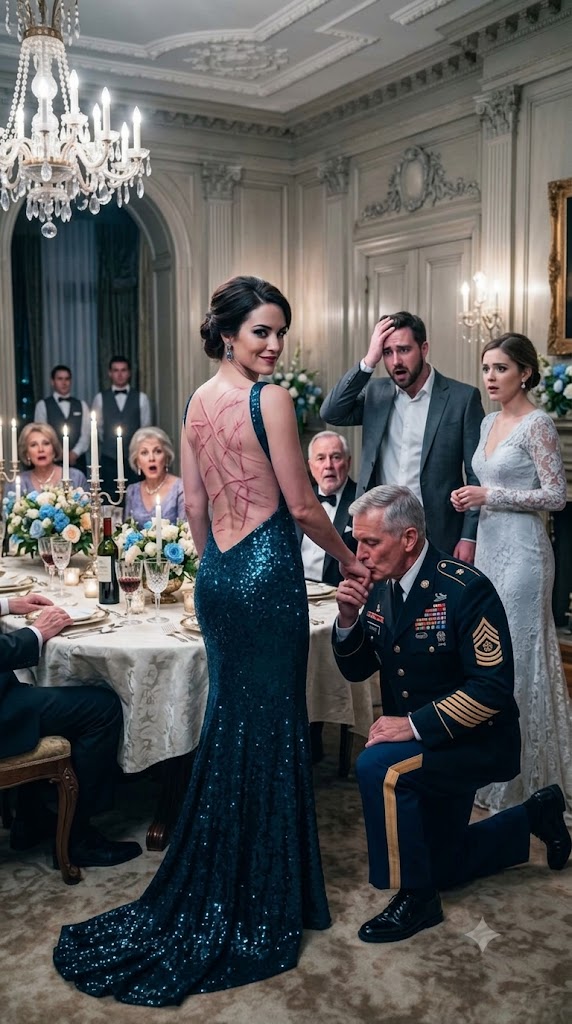
The shrill, demanding trill of my phone fractured the absolute quiet of my bedroom at precisely 2:07 AM. The aggressive blue numbers of my alarm clock bled across the shadowed wall, a neon indicator that my world was about to tilt on its axis. In my family, a phone call at this abysmal hour possessed only two possible translations: someone had abruptly ceased breathing, or someone desperately needed me to weave a tapestry of lies to pretend everything was perfectly fine.
“Grace,” the voice hissed through the receiver. It was a conspiratorial, frantic whisper, despite the fact that my mother was the architect of my current wakefulness. “Your brother’s engagement dinner is tomorrow evening. You may come.”
I pushed myself up, the cotton sheets tangling around my legs as a cold dread coiled in my gut. I rubbed the bridge of my nose, trying to banish the fog of sleep. “May?”
A heavy, calculated pause stretched across the digital ether. When she finally spoke, her tone had hardened into polished steel. “Only if you swear to keep your mouth shut.”
And there it was. My golden ticket.
My younger brother, Ethan, had managed to secure the affections of Cassandra Whitaker, a woman sculpted from high-society marble. She hailed from a dynasty of polished silver, polished reputations, and polished anecdotes designed for country club verandas. Her father, my mother had breathlessly informed me weeks prior, was a man of immense, intimidating stature. She spoke the name Colonel Thomas Whitaker not as if he were a flesh-and-blood human, but rather a bronze monument erected outside a federal courthouse.
“The Colonel does not tolerate dramatics, Grace,” my mother continued, her voice tight with an anxiety I couldn’t quite diagnose. “This dinner is the cornerstone of Ethan’s future. It matters.”
“What, exactly, am I being instructed to omit from the evening’s curriculum?” I asked, my voice dry.
“Your previous employment. The ugliness of your past. Your… abrasive attitude. The federal lawsuits. The journalistic inquiries. All of it. We are presenting a united, uncomplicated front.”
I didn’t answer immediately. Instead, my eyes drifted to the far corner of my dimly lit apartment. Leaning against the baseboard, still awaiting a nail after three months of residency, was a heavy, mahogany-framed certificate: Department of Justice Civil Rights Division, Special Commendation. Resting gently against the glass was a candid photograph taken when I was a naive twenty-two. In the glossy image, I was alarmingly pale, significantly thinner, and standing on the concrete steps of a military hospital. A stark white bandage was taped over my left temple, and my hands were locked in a death grip around a manila folder—a folder containing enough corrosive truth to melt the careers of several untouchable men.
My mother had never once inquired about the contents of that folder. Ignorance, in her carefully curated world, was not merely bliss; it was a survival tactic.
To my family, I was simply a problem to be managed. Grace Mercer was the difficult daughter. Grace humiliated them in polite company. Grace possessed the fatal flaw of asking the wrong questions at mahogany tables where women were strictly required to offer nothing but their blinding, agreeable smiles.
“Fine,” I whispered into the darkness.
“Grace, I need a promise.”
“I said fine, Mother.”
By six o’clock the following evening, I was standing in the cavernous, vaulted foyer of the Whitaker estate, encased in a suffocating black sheath dress that my mother had explicitly pre-approved via a rigorous text message interrogation. My heels pinched my toes like tiny, expensive warnings. Ethan enveloped me in a hug that was entirely too rigid, his forced smile silently begging me not to detonate. Cassandra offered a fragrant, superficial graze of her lips against my cheek. My parents hovered near the entrance to the parlor, their shoulders drawn tight, watching me as though I had strolled through the front door carrying a lit match and a canister of kerosene.
Then, the air in the room shifted.
Colonel Thomas Whitaker descended the grand, sweeping staircase. He was a monolith of a man. Tall, broad-shouldered, with hair the color of brushed aluminum. He wore a tailored navy suit, but his military medals were palpable, invisible insignias woven into the very fabric of how he commanded the oxygen in the room.
My mother instantly brightened, transforming into a creature of pure, desperate charm. “Colonel Whitaker! It is such an honor. This is our daughter, Grace.”
The Colonel stopped dead on the final marble step.
For a terrifying, suspended second, his facial muscles locked into total paralysis. Then, like water draining from a cracked porcelain basin, every single drop of color vanished from his weathered face.
His wife noticed the shift. Cassandra’s polite smile faltered. Ethan’s brow furrowed in confusion.
And I stood perfectly still, my heart executing a slow, heavy drumbeat against my ribs.
Colonel Whitaker stared at me with the horrified reverence of a man watching a deadbolt slide open on a door that was supposed to remain sealed for eternity.
“Grace Mercer,” he breathed, the words barely audible over the soft ticking of a grandfather clock.
My mother emitted a high-pitched, jagged laugh, a sound born of sheer panic. “Oh, goodness! Have you two crossed paths before?”
The Colonel did not look at her. His piercing, stormy eyes remained inextricably locked onto mine.
“Yes,” he said, his voice thick with an emotion I couldn’t quite decipher. “She saved my entire career.”
I folded my hands neatly at my waist, feeling the smooth leather of my clutch beneath my fingertips.
“No, Colonel,” I replied, the words slicing through the heavy air. “I saved the truth from being buried alive.”
Chapter Two: The Porcelain Battlefield
Nobody dared to draw a breath.
The Whitaker dining room was a masterclass in intimidation by wealth. It resembled a double-page spread in an architectural digest: an impossibly long mahogany table, towering silver candelabras dripping with white wax, crystal goblets that fractured the ambient light, and bone-ivory plates rimmed in 24-karat gold. It was an environment so ruthlessly curated that introducing raw honesty felt like an act of vandalism.
The desperate smile plastered across my mother’s face twitched violently.
Ethan’s gaze ping-ponged between the imposing figure of the Colonel and me, a knot of deep confusion tightening his jaw. Beside him, Cassandra’s manicured hand gripped his suit sleeve with white-knuckled intensity.
Colonel Whitaker was the first to navigate the paralyzing shock. Men forged in the crucible of military command usually were. He drew a slow, deliberate breath, visibly squared his broad shoulders, and gestured toward the feast awaiting us.
“We should sit,” he commanded, the authority returning to his cadence.
His wife, Margaret Whitaker, a slender, elegant woman whose ash-blonde hair was spun into a flawless chignon, offered a laugh that sounded like breaking glass. “Yes, of course, Thomas. The soup will become dreadful if it sits.”
But the ambient temperature of the room had plummeted.
My assigned chair was banished to the far end of the table, safely adjacent to my father. The moment my silk dress brushed the upholstery, he leaned in, his cologne masking the sharp scent of his anxiety.
“What in God’s name did you do?” he hissed into my ear.
I kept my gaze firmly fixed on the intricate, swan-like fold of the linen napkin resting on my lap. “You heard the man, Dad. I saved his career.”
My father’s jaw flexed so hard I feared his teeth might crack. “Grace. Not tonight.”
Not tonight. It was the Mercer family mantra. Not tonight. Not in this house. Not in front of the neighbors. Not when the stakes were this high. They never possessed the courage to provide me with a schedule dictating exactly when the truth would finally become a convenient commodity.
The first course materialized. A terrified-looking housekeeper, expertly pretending she was deaf to the suffocating tension, ladled roasted butternut squash soup from a gleaming silver tureen. Heavy silver spoons clinked nervously against porcelain. The sound was deafening.
Cassandra, bless her heart, attempted a rescue mission.
“Dad,” she said, her voice trembling slightly as she addressed the head of the table. “How, exactly, do you know Ethan’s sister?”
The Colonel’s spoon halted in mid-air, a few inches from his mouth.
My mother launched herself into the silence like a soldier throwing herself onto a grenade. “Oh, Cassie, dear, I’m absolutely certain it was just some mundane clerical overlap! Grace has bounced around several… administrative positions.”
Administrative positions. The lie tasted like ash in my mouth.
I offered a faint, razor-thin smile. “I was a lead investigative attorney assigned to a sprawling military contracting fraud syndicate five years ago.”
Ethan’s eyebrows shot upward, disappearing into his hairline. “You never told me you worked a syndicate case.”
“You were rather preoccupied actively screening my phone calls during that particular era, Ethan,” I shot back smoothly.
A dark, humiliated flush crept up his neck.
Colonel Whitaker slowly lowered his spoon, resting it on the saucer. “Ms. Mercer was an integral component of a localized federal review team.”
“A component?” I repeated, raising an eyebrow.
His stormy eyes flicked toward me. It was a silent plea. A warning.
I had been granted entry to this gilded fortress on one solitary condition: keep my mouth shut. But the Colonel had committed a fatal tactical error. He had spoken my name aloud. He had rolled away the stone from the tomb.
I shifted my gaze to Cassandra, addressing her directly. “Your father commanded a highly sensitive logistics oversight unit attached to a massive defense supply chain in Virginia. A civilian contractor operating under his chain of command was systematically bleeding the federal government dry, billing millions for trauma medical transport equipment that did not exist.”
Margaret Whitaker’s face tightened into a severe, disapproving mask. “This hardly seems like appropriate dinner conversation, Grace.”
“I couldn’t agree more, Mrs. Whitaker,” I replied, meeting her icy glare. “Systemic federal fraud rarely pairs well with a delicate Pinot Noir.”
From the other end of the table, my mother whispered my name. It wasn’t a plea; it was a threat wrapped in velvet.
Cassandra ignored them all, her voice barely a whisper. “Dad? Is this true?”
Colonel Whitaker suddenly looked ancient. The rigid posture remained, but the vitality had drained out of him. He looked like a man hopelessly trapped by a sanitized version of his own history—a history he desperately prayed had been redacted from the world’s memory.
“I was fully exonerated by the board of inquiry,” he stated, his voice thick with defensive pride.
“Yes,” I agreed, taking a slow sip of my ice water. “Eventually.”
Ethan leaned forward, his elbows resting on the fine mahogany, social graces entirely abandoned. “What the hell does ‘eventually’ mean, Grace?”
“It means,” I said, letting the words hang in the air, “that when the initial scandal detonated, the preliminary internal reports were meticulously doctored. They made it appear as though Colonel Whitaker had personally authorized the fraudulent invoices and signed off on the phantom equipment. His signature was plastered across every damning document.”
Cassandra’s lips parted in silent horror.
At the head of the table, the Colonel’s knuckles shone white as he gripped his crystal goblet.
“But the signatures were masterfully forged,” I continued, my voice steady, carrying the cadence of a closing argument. “Someone deep inside his own office was utilizing archived authorization scans. We found three whistleblowers who were prepared to testify to the forgery. But they had been brutally intimidated. Only one of them possessed the courage to come to my office.”
My mother blinked rapidly. She had anticipated that I would bring embarrassment to the table. She had not anticipated that I would bring a fully corroborated federal indictment.
I turned my head slowly, locking eyes with the Colonel. “And then, precisely forty-eight hours before the grand jury hearing, that crucial witness completely vanished.”
Margaret pushed her chair back, the wooden legs scraping harshly against the Aubusson rug. “That is quite enough of this morbid fiction!”
But Cassandra did not look away from me. Her eyes were wide, pleading.
“Vanished?” she echoed.
I nodded grimly. “Transferred overnight without a paper trail. Employment records scrubbed. Cell phone permanently disconnected. Her apartment was emptied down to the lightbulbs.”
Ethan exhaled a shaky breath. “Jesus Christ.”
Colonel Whitaker closed his eyes, as if shutting out the light could rewrite the past.
“I tracked her down,” I said softly. “I found her in a rundown motel off Interstate 95 in Maryland. She was terrified out of her mind. She had been physically assaulted. She was packing a bag, ready to disappear into the wind for good.”
My father stared at me from across the soup bowls as though I were a terrifying stranger who had just unzipped a human suit, though I had been this exact woman for half a decade.
“I convinced her to stay. I brought her testimony into the light,” I said. “It completely dismantled the forgery. It cleared Colonel Whitaker’s name. It also resulted in the indictment of the civilian contractor, two corporate supervisors, and a corrupt lieutenant colonel who ultimately pled guilty to avoid federal prison.”
Cassandra slowly turned her head to look at her father. “Why? Why didn’t you ever tell us this happened?”
The Colonel opened his eyes. The storm in them had broken, leaving behind a devastating, profound sorrow. He looked directly at me.
“Because,” Colonel Whitaker rasped, his voice breaking under the weight of a five-year-old sin, “Grace Mercer is the one who paid the butcher’s bill for it.”
Chapter Three: The Blood on the Ledger
For the first time in my thirty-two years on this earth, nobody at the table lunged to interrupt me.
Even my mother, a woman who had spent my entire adult existence treating my penchant for the truth like a virulent, airborne disease, sat utterly petrified. Her silver spoon lay abandoned beside her untouched squash soup.
Colonel Whitaker’s voice, when it returned, was low, meticulously controlled, and entirely stripped of the aristocratic polish he had worn like armor when he first entered the foyer.
“She was twenty-seven years old,” the Colonel said, addressing the room but never breaking his gaze with me. “Not much older than Cassie is sitting here tonight. She possessed no military rank. She had no powerful political family to shield her. She had zero federal protection detail. And she had absolutely no logical reason to throw herself onto the pyre for me.”
“That is a categorical falsehood, Colonel,” I interrupted softly.
He blinked, the sorrow in his eyes deepening.
“I had every reason,” I continued, my voice unwavering. “An innocent woman was being terrorized into silence. Crucial, exonerating evidence was being actively incinerated by the people sworn to protect it. And a good man was being framed for treason. That was reason enough.”
The Colonel’s mouth tightened into a hard, bitter line. It was as if my absolution caused him significantly more physical agony than an accusation ever could have.
Cassandra slowly rotated her body toward me. The glossy veneer of the perfect bride-to-be had vanished. “What did he mean, Grace? What happened to you?”
I could have sanitized the narrative. I could have employed the sterile, bureaucratic jargon of the Beltway. I could have cited professional retaliation—the cowardly phrase cowards use when they want human suffering to sound like a minor administrative hurdle. I could have cited a complication of career trajectory. I could have obeyed my mother and remained silent.
But my mother had dragged me from sleep at two in the morning to issue a gag order. And I was done choking on their comfort.
“The architects behind that fraud network had powerful, desperate friends,” I said, my voice dropping to a near whisper that forced everyone to lean in. “Not just nested within the contracting firm. They had moles inside the Department of Defense. They had friends running private, off-the-books security firms. They knew exactly when I located the missing witness. They knew the address of the Maryland motel I hid her in. They knew the license plate of my rental car.”
Ethan gripped the edge of the mahogany table, all the color draining from his face. “Grace… what are you saying?”
I turned my head, holding my brother’s terrified gaze. “You’ve always wanted to know the real reason I didn’t attend your law school graduation dinner, Ethan?”
His lips parted, but his vocal cords failed him.
“I was lying in a secure ward at Arlington Memorial Hospital,” I stated, the memory of the sharp, antiseptic smell flooding my sinuses. “I was nursing a severe Grade III concussion, three splintered ribs, and a fractured orbital bone from a warning they delivered to me in a parking garage.”
My father’s heavy wooden chair scraped violently against the floorboards as he recoiled. “We… we were explicitly told you had a sudden, unavoidable work conflict in Chicago.”
“No, Dad,” I corrected, a bitter, hollow laugh escaping my chest. “You were told that specific lie because Mother decided that my violent assault was far too ‘inconvenient’ and she didn’t want to upset Grandma during the celebratory champagne toast.”
My mother’s cheeks ignited in a furious, humiliating crimson. “Grace! That was not the appropriate venue to frighten the entire extended family with your melodrama!”
The sheer audacity of the word nearly took my breath away. “Melodrama? Mother, I was coughing up blood while you were complaining about the catering.”
Colonel Whitaker lowered his heavy head, bracing his elbows on the table and burying his face in his hands.
The dining room doors swung open. The housekeeper entered carrying a massive silver platter holding the main course. She took one look at the devastated, tear-streaked faces around the table, pivoted sharply on her heel, and vanished back into the kitchen, taking the roasted lamb with her.
Margaret Whitaker shot to her feet, her chair wobbling precariously. “Thomas, this is a profound humiliation. I will not host a trauma dumping session in my own home!”
He dropped his hands, turning his head to look up at his wife. “Sit down, Margaret.”
The command was not shouted. It was barely above a whisper. And that made the sheer, lethal gravity of it a thousand times worse.
Margaret stared down at him, her mouth opening and closing like a suffocating fish.
Perhaps in thirty years of marriage, he had never once addressed her with such venom in front of company. Or perhaps he had, and the entire Whitaker clan had silently signed a non-disclosure agreement to pretend it never happened.
Slowly, her knees buckling slightly, Margaret sat.
The Colonel turned his attention to his daughter. “I should have told you this story years ago, Cassie. I should have told the world.”
Cassandra’s voice was the size of a thimble. “Why didn’t you, Daddy?”
“Because I was a coward. I was ashamed.”
“Ashamed of being framed by your own men?”
“No.” He glanced at me, the ghost of a broken man haunting his features. “Ashamed of letting a brilliant, fearless young woman carry the crushing, violent consequences of a war that I, as a commanding officer, should have seen coming.”
I shifted uncomfortably in my chair. I despised the sudden, suffocating blanket of sympathy settling over the mahogany table. Pity is a useless currency when it is paid five years late. It felt like a neighbor offering you a bucket of water after your house had already burned to the foundation.
“You did not let me do a damn thing, Colonel,” I said sharply. “I am an autonomous woman. I made my strategic choices, fully aware of the board.”
“Yes,” the Colonel agreed softly. “And the moment you made those choices, men twice your age, wielding ten times your institutional power, utilized every weapon in their arsenal to crush you into dust for daring to challenge them.”
My mother, sensing the narrative slipping entirely from her manicured grasp, defensively folded her arms across her silk blouse. “Grace has simply always possessed a rather… unfortunate knack for attracting conflict.”
The words landed perfectly in the center of the table, as they always did. My mother never resorted to screaming when she wanted to draw blood. She vastly preferred the sterile efficiency of a surgical scalpel.
Cassandra stared at her future mother-in-law in abject horror. Ethan did as well, seeing the woman who raised him through a suddenly cracked lens.
Colonel Whitaker’s eyes sharpened into flint.
“Mrs. Mercer,” he growled, the military commander finally rising to the surface, “your daughter did not attract conflict. She marched directly into the jaws of a federal conspiracy because every other man in my command structure was too deeply terrified to move a muscle.”
My mother’s mouth snapped shut, pressing her lips into a thin, bloodless line.
My father awkwardly cleared his throat, desperately trying to salvage his patriarchal authority. “Now, see here, Colonel… with all due respect, we were kept entirely in the dark. We didn’t know the graphic details of her… situation.”
I turned slowly toward the man who had taught me how to ride a bicycle. “You didn’t know, Dad, because you aggressively did not want to know.”
The silence that followed was fundamentally different than the shock that preceded it.
It was no longer the paralysis of surprise. It was the crushing, suffocating weight of slow, unwelcome recognition. The ugly truth was finally shedding its skin in the middle of the dining room.
Ethan aggressively rubbed both hands over his face, as if trying to scrub the last five years from his memory. “Grace,” he croaked, his voice cracking. “I called you dramatic when you wouldn’t come out for drinks that month.”
“Yes, you did.”
“I… I told Cassandra when we first started dating that you had a massive victim complex.”
“Yes, Ethan. You did.”
His eyes swam with fresh, hot tears. “God. I didn’t know. I swear to you, Gracie, I didn’t know.”
“You didn’t ask,” I reminded him, my voice devoid of malice, but heavy with finality.
He flinched as if I had struck him with a closed fist.
Beside him, Cassandra slowly pulled her hand away from his suit sleeve. It was a minuscule, almost imperceptible withdrawal of physical affection, but in the amplified tension of that room, it felt like a canyon splitting the earth between them.
“Cass,” Ethan whispered, absolute terror bleeding into his eyes.
She turned her head to look at him. Her expression was not cruel, nor was it theatrically vindictive. It was the terrifyingly clear, calculating gaze of a woman rapidly reassessing the structural integrity of the man she had promised to marry.
“You told me your sister was a bitter, isolated spinster,” Cassandra said, her voice eerily calm.
Ethan swallowed audibly, his Adam’s apple bobbing. “That’s… that’s what Mom always told me she was.”
“And you blindly repeated it, without ever once asking her for the truth.”
Ethan had no defense. He stared at his empty water glass, utterly defeated.
Colonel Whitaker pushed his untouched bowl of squash soup an inch forward. “There is one final piece to this puzzle.”
I snapped my head toward him, genuine alarm spiking in my chest. “Colonel, stop.”
“No,” he said, shaking his head slowly. “You have spent five years absorbing the shrapnel to protect the reputations of cowards. The protection detail ends tonight.”
Margaret Whitaker’s perfectly powdered face suddenly contorted. For the first time all evening, the icy matriarch looked genuinely, deeply afraid.
Cassandra, attuned to her mother’s frequency, noticed instantly. “Mom? What is he talking about?”
The Colonel refused to look at his daughter, keeping his eyes locked on his wife. “When the federal case officially closed, and the indictments were unsealed, I desperately wanted to contact Grace. I wanted to organize a press conference to thank her publicly. I demanded that her name be permanently attached to every federal report where my honor had been restored.”
My stomach performed a sickening, violent roll.
“However,” the Colonel continued, his voice dropping into a deadly, gravelly register, “I was heavily advised not to make any contact.”
Margaret sat as still as a statue, her chest barely rising.
Cassandra’s brows drew together, forming a deep V of confusion. “Advised? Advised by whom? The Pentagon?”
“By my legal counsel, initially,” the Colonel said, his eyes drilling holes into his wife. “And then, with relentless aggression, by your mother.”
Chapter Four: The Architects of Illusion
Margaret’s string of Mikimoto pearls shifted slightly as she defiantly lifted her chin, attempting to summon a storm of indignation to mask her guilt. “I was protecting the sanctity of this family, Thomas!”
“No,” he fired back, slamming an open palm flat against the mahogany table. “You were protecting an illusion!”
Margaret let out a short, freezing bark of laughter. “And what exact reality would you have preferred I allow, Thomas? Our only daughter was actively applying to Ivy League universities while the Washington Post was heavily implying her father was days away from a federal indictment! Reporters were digging through our trash! I was not about to let Grace Mercer become some tragic, bleeding-heart heroine permanently shackled to the Whitaker name in the Google search results for the rest of eternity!”
I sat perfectly, rigidly still.
There it was. The ugly, rotting heart of the matter.
It wasn’t hatred. Hatred I could have fought. Hatred requires passion. What Margaret Whitaker and my mother shared was something infinitely colder, infinitely more insidious: the sheer inconvenience of my suffering.
Margaret slowly turned her head, looking at me directly for the first time that evening. She looked at me not as a guest, nor as a savior, but as a stubborn wine stain on a priceless rug that had simply refused to fade in the wash.
“You survived, Grace,” Margaret said, her voice devoid of human empathy. “Thomas survived. The guilty contractors were sentenced. The scales were balanced. There was absolutely zero tactical need to keep dragging that sordid ugliness back out into the daylight.”
Cassandra stood up with such violent force that her heavy wooden chair teetered backward, threatening to crash to the floor.
“Mom!”
Margaret didn’t flinch. She kept her eyes on me. “Sit down, Cassandra. Do not make a scene.”
“No.”
The single syllable sliced through the heavy atmosphere like a machete.
Cassandra Whitaker had been impeccably polite all evening. She was graceful, meticulously managed, a compliant daughter trained in the exact same ruthless school of appearances that my own mother had attended. But the glossy porcelain mask had definitively cracked, and beneath it boiled a furious, righteous anger.
“You knew?” Cassandra demanded, her voice shaking with rage.
Margaret exhaled an impatient, aristocratic sigh. “I knew enough of the broad strokes.”
“Did you know Grace had been physically beaten in a parking garage because of Dad’s case?!”
Margaret’s eyes flicked dismissively toward me. “I was informed there had been a minor physical altercation, yes.”
An altercation.
I felt Ethan staring at the side of my face, his silent horror radiating across the room, but I refused to turn and grant him absolution with my eyes.
Colonel Whitaker’s voice dropped another octave, sounding like rocks grinding together. “Your mother also intercepted the mail.”
Margaret snapped, her composure finally fracturing. “Thomas, that is enough!”
“What mail?” Cassandra cried, her hands gripping the edge of the table.
The Colonel looked at me, a profound apology written in the deep lines of his face. “Grace wrote a letter to me, approximately six months after the grand jury concluded.”
The moisture in my mouth evaporated instantly.
I had long since forgotten the specific verbiage, but the visceral memory of typing it hit me like a physical blow. I remembered sitting at the cheap laminate desk in my old, cramped apartment. My left wrist was still heavily encased in a brace, screaming in pain from physical therapy. I had been forced to type the document using only two fingers because the nerve damage caused my hand to cramp violently after ten minutes.
I had written exactly one letter.
I didn’t ask for a financial settlement. I didn’t beg for public adoration or a medal. I had simply requested a formal, written statement from a commanding officer confirming that my rogue actions in Maryland had been institutionally authorized and material to the defense of the United States.
A single, professional letterhead could have saved me when I was being quietly, systematically marginalized by the DOJ. It could have saved my career when cowards in management stopped assigning me major investigations, when colleagues suddenly stopped inviting me into the secure rooms where the actual decisions were made.
I never received a reply. I assumed the Colonel, like everyone else, had taken his salvation and run.
The Colonel slowly reached a hand into the interior breast pocket of his tailored jacket. He withdrew a single, tri-folded sheet of standard printer paper. It was deeply yellowed at the edges, profoundly creased, and looked as though it had been unfolded and refolded a thousand times in the dark.
Margaret Whitaker’s face drained of the last remaining drop of blood. She looked like a ghost.
“Daddy?” Cassandra whispered, her voice breaking.
“I found this buried in a cardboard box of mundane household tax files three years later,” the Colonel explained, his eyes never leaving the yellowed paper. “It was discovered after we relocated from the Virginia house. The envelope had been sliced open. And not by my hand.”
He reached out and placed the letter gently in the absolute center of the mahogany table.
It sat there, a radioactive artifact. Nobody dared to breathe near it.
I didn’t need to read the faded ink. I knew the scent of my own desperate, twenty-seven-year-old fear just by looking at it.
“My wife intercepted my mail to bury this woman a second time,” the Colonel said, his voice laced with absolute disgust.
Chapter Five: The Weight of Paper
Margaret stood up, her chest heaving, the veneer of high society completely shattered. “I will not be put on trial in my own dining room like a common criminal!”
“You are not being put on trial, Margaret,” the Colonel replied, his voice terrifyingly calm. “You are finally being seen.”
Her mouth trembled violently, not with the agonizing sting of remorse, but with the feral, cornered rage of a narcissist exposed.
And then, my mother—unbelievably, spectacularly oblivious to the tectonic plates shifting beneath our feet—chose that precise moment to interject.
“Well, really, Colonel,” my mother sniffed, adjusting her posture. “Families of our standing must handle these delicate unpleasantries privately. That is simply all Margaret was attempting to achieve. A little discretion.”
I slowly rotated my neck, feeling the bones crack, until I was staring directly into the eyes of the woman who gave birth to me.
“Of course you would defend her, Mother,” I whispered, the venom finally leaking into my tone. “You share the exact same pathology.”
“Grace Mercer, do not dare use that insolent tone with me in mixed company!”
“What tone would you prefer I use?” I asked, my voice rising, vibrating with years of repressed fury. “Should I use the tone you used when you whispered to Aunt Sylvia that I was mentally unstable? Was that easier for your book club to swallow than admitting your daughter had her face smashed against a concrete pillar for doing her job?!”
My father slammed his hand on the table. “That is enough, Grace!”
“No!”
The shout did not come from me. It didn’t come from the Colonel.
We all whipped our heads toward Ethan.
He was standing now, his chair pushed back. He was trembling from head to toe, his face a canvas of pale, sickening realization. But his jaw was set with a determination I had not seen since we were children.
“No, Dad. It is not enough.” Ethan turned his furious gaze entirely upon our mother. “You told me Grace skipped my graduation because she was insanely jealous of my law degree. You told me she boycotted Christmas because she was a narcissist demanding attention. You actively instructed me not to call her when she was pushed out of the DOJ because she quote, ‘needed to learn the consequences of her dramatics.’”
My mother’s eyes filled with defensive tears, but her spine remained rigidly straight. “Ethan, I was desperately trying to keep the fabric of this family from tearing apart!”
“You didn’t keep us together!” Ethan screamed, the raw sound echoing off the crystal chandelier. “You actively engineered a blockade to keep us away from her when she was bleeding out!”
The ferocity of his own words seemed to physically shake him. He gripped the edge of the table to remain standing.
For the very first time in my life, I did not see Ethan as the pampered, golden child who had comfortably swallowed every convenient lie handed to him on a silver platter. I saw a man experiencing the horrifying realization that the entire foundation of his reality had been poured crooked by the architects he trusted most.
Cassandra stepped slowly away from the table, distancing herself from the radioactive fallout of her own parents, and moved toward me.
“Grace,” Cassandra said, her voice thick with unshed tears. “I am so deeply, profoundly sorry.”
It was simple. It lacked theatricality. She wasn’t performing an apology to demand my immediate comfort in return. She was simply acknowledging the carnage.
That made it bearable. I offered her a single, slow nod.
Ethan turned his devastated eyes to me. “Grace… I am so sorry. For everything.”
I did not rush to offer him the life raft of my forgiveness. People always expect forgiveness to be delivered like room service, demanding it the exact second their own guilt becomes too suffocating to endure.
“I hear you, Ethan,” I said softly.
His face crumbled, but he nodded, accepting the boundary.
Colonel Whitaker reached across the linen tablecloth, picked up the yellowed, creased letter, and held it out across the expanse of the mahogany table.
“This belongs to you, Ms. Mercer,” he said softly.
I stood up, walked the length of the table, and took it from his large, calloused hand. The paper felt agonizingly thin, entirely insufficient to hold the weight of the last five years.
Margaret let out a sharp, humorless sound, a desperate attempt to reclaim the high ground. “So, what is the grand finale? Does everyone offer a standing ovation for Saint Grace? Do we completely rewrite our family histories before the dessert course?”
“No,” I said, slipping the letter into my small black clutch.
Every eye in the room was locked onto me.
“Now,” I began, my voice projecting with total clarity into every corner of the room, “Cassandra must decide if she is willing to legally bind herself to a family where calculated silence is intentionally mistaken for loyalty. Ethan must decide if he wants to remain a child, protected from ugly truths that might cause him a momentary inconvenience. And my parents must go home and decide if their country club reputation is still worth the price of a daughter.”
My mother’s tears finally spilled over, ruining her immaculate mascara. “Grace, you are being incredibly unfair to us!”
I looked down at her, and for the first time in my life, I felt absolutely no instinct to shrink myself to make my pain more digestible for her palate.
“No, Mother,” I said, exhaustion settling deep into my bones. “I’m just being honest. I know it’s a foreign language to you.”
The Colonel’s mouth twitched, the ghost of a proud smile touching his lips, though his eyes remained utterly broken.
Cassandra slowly reached for her left hand.
With a deliberate, agonizing slowness, she slid the massive, three-carat diamond engagement ring off her finger.
Ethan stared at the platinum band as though it had transformed into a venomous snake.
“Cass,” he choked out, his voice shattering completely.
She held the ring in her open palm. She didn’t throw it at him, nor did she hand it back. She simply held it, a physical manifestation of a suspended future.
“I am not ending our relationship tonight, Ethan,” Cassandra said, her voice shaking but resolute. “But I absolutely cannot move forward with you tonight, either.”
Ethan closed his eyes, tears tracking down his cheeks, and gave a slow, devastated nod.
It was the first genuinely honest, courageous thing my brother had done all evening.
Chapter Six: The Oxygen of Truth
Margaret turned her back to the table in a furious huff, gripping the back of her chair as if it were a life raft in a hurricane. My mother sat weeping silently into her linen napkin, mourning the death of the illusion she had spent decades curating. My father looked hollowed out, aging ten years in the span of thirty minutes. Colonel Whitaker sat tall and straight-backed, but the impenetrable armor of the military titan had dissolved, leaving behind only a weary, regretful man.
And me?
I felt lighter than I had in half a decade.
The suffocating black dress my mother had mandated suddenly felt like a theatrical costume for a play that had just been permanently cancelled.
“Thank you for having me,” I said quietly to the room at large.
Cassandra let out a wet, disbelieving laugh that caught in her throat. “Grace… we never even ate.”
“No,” I agreed, offering her a soft, genuine smile. “But I think everyone at this table finally got served.”
I turned on my heel and walked out of the dining room before a single soul could muster the courage to stop me.
My heels clicked rhythmically against the marble of the foyer, the sound echoing in the vast, empty space. I reached out, wrapping my hand around the cool brass of the heavy front door handle.
“Grace. Wait.”
I paused, closing my eyes for a fraction of a second, before turning around.
Ethan stood beneath the massive crystal chandelier. Stripped of his arrogance, stripped of his mother’s protective shielding, he looked incredibly small. He looked younger than his thirty-one years, his eyes rimmed in red, his expensive suit hanging slightly loose on his frame.
“I don’t know how to fix this,” he admitted, his voice a broken whisper.
I looked at him, feeling the ancient, heavy resentment in my chest begin to fracture and dissolve.
“You start,” I told him gently, “by not demanding that I be the one to teach you how to build the hammer.”
He swallowed hard, nodding slowly. “Okay. Okay, I can do that.”
I pushed the heavy door open, letting the cold, crisp evening air flood the stagnant foyer.
“And Ethan?” I called back over my shoulder.
“Yeah?”
“Do not marry that woman in there unless you are fully prepared to speak the truth, even when you know it’s going to cost you something you love.”
He looked back toward the dining room archway. Cassandra’s silhouette was standing in the shadows, watching him, waiting to see what kind of man he was going to choose to be.
“I know,” Ethan said softly.
I stepped out into the night, the heavy door clicking shut behind me with a profound finality.
The autumn air felt sharp, clean, and aggressively alive. I walked alone down the sweeping, manicured stone driveway toward my car. Behind me, the massive Whitaker estate glowed against the dark sky, its illuminated windows projecting an image of absolute, unassailable perfection.
But I knew the reality. Inside that glass castle, the labyrinthine walls had finally heard the devastating echoes of the truth. The foundation had cracked. The rot had been exposed to the oxygen.
I slid into the driver’s seat of my car, tossing my clutch onto the passenger seat. I placed my hand over the leather, feeling the outline of the yellowed, folded paper resting inside. It wasn’t a commendation. It wasn’t a public apology. It was just a piece of paper.
But as I put the car in drive and pulled away from the estate, I realized I no longer needed their validation to heal the scars on my ribs. I had spoken my peace into the darkness, and the darkness had blinked first.
And this time, not a single person on earth possessed the power to tell me to keep my mouth shut.