Chapter 1: The Weight of the Ashes
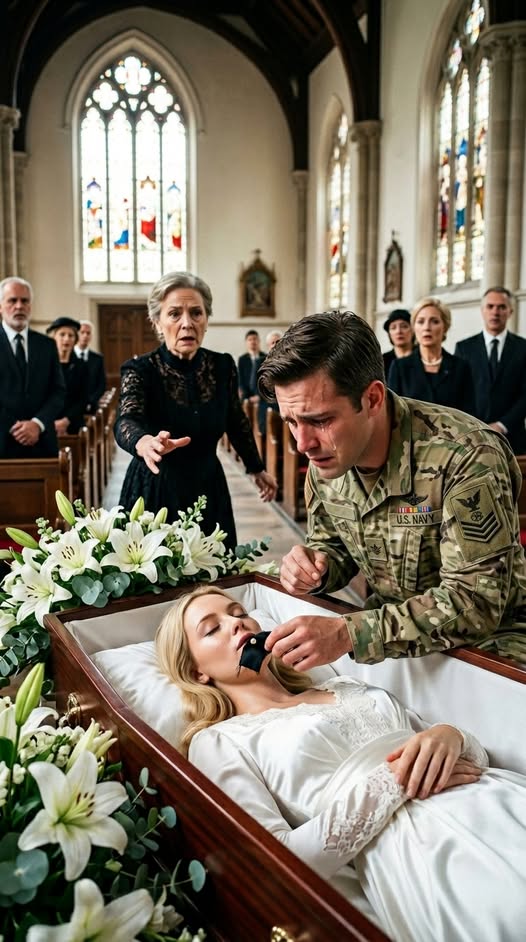
The hardest battles of my life were not fought in the suffocating, dust-choked valleys of the Middle East, nor were they waged under the blinding, merciless sun of a foreign desert. No, the most brutal war I ever fought took place on American soil, in the quiet, tree-lined streets of my hometown. It was a war waged in the shadows of a community that believed it was safe, a war initiated not by a faceless enemy in a tactical vest, but by the woman who had brought me into this world.
My transport plane touched down at Dover Air Force Base forty-eight hours before Independence Day. For seven agonizing months, the only things that had kept the frost out of my veins and the darkness out of my mind were the crumpled photographs tucked inside my body armor: my wife, Clara, with her vibrant, infectious smile, and our two-year-old son, Toby, a boy whose laugh I could hear even over the deafening roar of artillery fire. I had survived the deployment. I had done my duty. All I wanted was the suffocating embrace of a homecoming, the smell of Clara’s vanilla perfume, and the tiny, frantic footsteps of my son racing across the hardwood floor.
Instead, the universe offered me a masterclass in cruelty.
The heavy, cloying scent of lilies and melting paraffin wax hung thick in the stagnant air of St. Jude’s Community Church. I was still clad in my travel-worn military dress blues, the fabric stiff with the invisible grime of a thirty-hour transit. Every step I took down the center aisle felt like I was wading through wet concrete. The floor tilted beneath my polished boots. The stained-glass windows, illuminated by the fading afternoon sun, cast fractured, bloody prisms of light across the wooden pews.
Standing beside a massive mahogany casket at the altar was my mother, Meredith Miller. She was dressed impeccably in a high-collared, black lace vintage dress, a garment that spoke of old money and practiced mourning. She wept softly, a picture-perfect portrait of a devastated matriarch, cradling my beautiful, oblivious Toby in her arms.
“She was a hero, Garrett,” Meredith whispered as I approached, her voice trembling with a fragility I had never known her to possess. She reached out, resting a manicured hand on my brass buttons. “A reckless driver came out of nowhere on Route 9. Clara… Clara pushed Toby onto the sidewalk in the stroller. She threw him out of the way, but… she couldn’t save herself. The driver didn’t even slow down.”
I felt a hollow, absolute numbness consume me. The world outside the church ceased to exist. I stepped closer to the casket, my breath trapped in my lungs, and looked down at my wife.
The mortician had done their best, but the heavy foundation and artful contouring could not completely hide the brutal, unnatural angles beneath her skin. Yet, she was still breathtaking. Her pale, beautifully preserved face looked like porcelain trapped in an eternal, silent sleep. A fault line cracked open right through the center of my chest. Bending down, my vision blurring with hot, unwept tears, I pressed my lips against her cold, rigid cheek in a final, agonizing goodbye.
As I pulled back, hovering just inches from her face, my eyes caught a tiny, unnatural glint in the shadow of her mouth. Her lips were parted just a fraction of an inch, locked in the stiffness of death.
My heart began to hammer a frantic, violent rhythm against my ribs. Something was wrong. The air in the church suddenly tasted like copper and ozone. Shielding my movements with my broad shoulders, I used my thumb and forefinger to gently, carefully pry her rigid jaw open just a millimeter more.
Tucked beneath her pale tongue, lodged against her lower teeth, was a small, torn piece of black silk. It was stained with dark, dried blood, and attached to it by a single, frayed thread was a distinctive, hand-carved pearl button.
My breath caught in my throat. The chill of the casket radiated up my arms. I knew that button. I knew that fabric.
Slowly, fighting the violent tremors threatening to overtake my hands, I looked up at Meredith. She was staring at me with wide, anxious eyes, the artificial tears drying on her cheeks. As her gaze locked onto my face, her hand instinctively flew to her neck, clutching the high lace collar of her black dress.
Right there, barely hidden beneath the folds of her lace shawl, was a jagged, frayed tear in the delicate black silk. The custom pearl button that was supposed to sit right at her clavicle had been violently ripped away.
Meredith’s eyes flicked down toward the casket, then back up to me. The sorrow in her expression shattered, replaced for a fraction of a second by a stark, terrifying calculation. She knew that I had seen something. And in that suffocating silence, as the mother who raised me stared me down over the corpse of the woman I loved, I realized I had exactly three seconds to hide the evidence before the killer in front of me realized her execution had been botched.
Chapter 2: The Art of the Facade
I forced my hand to slip smoothly into my trouser pocket, the sharp, jagged edges of the broken pearl button digging mercilessly into my palm. The pain was a grounding wire, a physical anchor that kept my mind from fracturing into a thousand pieces. I could not accuse her. Not here. Not when she was holding my son.
I let the grief take over, amplifying the genuine devastation ravaging my soul to mask the predatory rage boiling beneath it. I let my knees buckle. I dropped to the hardwood floor beside the casket, burying my face in my hands, letting out a choked, guttural sob that echoed off the vaulted ceilings. It was the perfect cover for my violently trembling frame.
Meredith rushed to my side, shifting Toby to her left hip so she could place a comforting hand on my shoulder. Her touch, once a source of childhood solace, now felt like the crawl of a venomous spider across my skin.
“Oh, my sweet boy,” she cooed, her voice dripping with an artificial warmth that made my stomach churn. “It’s too much for you. The jet lag, the shock, the heartbreak. You need to let me take care of things now.” She stroked my hair, her fingers lingering near my neck. “Toby and I will stay at my house on Elm Street. You should come with us. We’ll handle the insurance claims, the funeral costs, the detectives… you don’t have to worry about a single thing. You’re too traumatized to be alone right now.”
I stared at the dusty floorboards through my fingers, my mind racing through tactical assessments. The woman who had packed my lunches, who had kissed my scraped knees, had just run over my wife and left her to die on the asphalt. I looked up at Toby. He was asleep against her shoulder, his little chest rising and falling, completely unaware of the wolf that was carrying him.
I forced my facial muscles to relax into a portrait of absolute, broken dependency. I looked up at Meredith, offering a tearful, shattered smile. “Thank you, Mom,” I whispered, the words tasting like ash. “I don’t know what I’d do without you. Let’s go home.”
The drive to her sprawling Victorian house was agonizing. The silence in the car was heavy with unspoken words and hidden daggers. Once we arrived, she immediately took charge, bustling about the kitchen, insisting she make her famous roast. She was playing house. She was playing mother to my son.
Later that evening, while Meredith was downstairs clattering pots and pans, I told her I needed to lie down in my childhood bedroom. The moment I heard the oven door slam shut, I slipped silently out of my room and crept down the hall to her home office.
My military conditioning, forged in the crucible of hostile environments, kicked in. I compartmentalized the screaming agony of my shattered heart and analyzed my mother not as a parent, but as an active, hostile threat.
The office smelled of lemon polish and stale lavender. I bypassed the obvious spots and went straight for the heavy oak filing cabinet tucked in the corner. It was secured with a sturdy brass padlock. Drawing a small, steel tension wrench and a diamond pick from my wallet—tools I had carried in my kit for years—I manipulated the pins. Thirty seconds later, the lock clicked open with a soft, metallic sigh.
I slid the heavy drawer open, sifting through years of tax returns and property deeds until I found a sleek, black leather portfolio hidden at the very back. I pulled it out and laid it on the desk, turning on a small reading lamp to illuminate the pages.
Inside was a legally binding custody agreement, completely drawn up and notarized, granting Meredith Miller full parental rights and guardianship over Toby Miller in the event of Garrett Miller’s deployment or incapacitation. The signature at the bottom, supposedly mine, was a flawless forgery.
But it was the document beneath it that made the blood freeze in my veins.
It was a life insurance policy under Clara’s name, naming Meredith as the primary trustee for Toby, with a total payout of half a million dollars. The ink on the final signature line was barely dry. It had been finalized and processed exactly three weeks prior to Clara’s death.
As I stared at the monstrous paperwork, my phone vibrated silently in my pocket. I pulled it out. It was a motion alert from the baby monitor app I had synced to the camera in the guest room where Toby was sleeping. I tapped the notification, watching the live feed load in the darkness of the office.
The grainy, green night-vision footage flickered to life. There was Meredith, standing over Toby’s crib in the dead of night. She wasn’t just checking on him. She was holding a small, decorative throw pillow in both hands, hovering it inches above my sleeping son’s face, staring down at him with a chillingly vacant, sociopathic expression that I had never seen before.
Chapter 3: The Midnight Reconnaissance
My pulse thudded in my ears like a war drum. I watched the screen, barely daring to breathe, my thumb hovering over the dial pad to call 911. On the tiny screen, Meredith stood motionless for what felt like an eternity, the pillow suspended in the green-tinted darkness. Then, slowly, she lowered the pillow, tucked it under her arm, and gently pulled the blanket up to Toby’s chin. She turned and walked out of the frame.
She wasn’t going to kill him. She was practicing her control. She was asserting her dominion over the life she had stolen.
I needed proof. Hard, irrefutable, physical proof that couldn’t be manipulated by a slick lawyer or brushed under the rug by a sympathetic local police force. Oakhaven was a town where Meredith Miller sat on every charity board and hosted the annual police benevolent fund dinner. If I went to the local cops with a ripped button and a forged signature, they would call her before they even filed the report.
I needed a ghost. I slipped out the back door into the humid July night, the crickets screaming in the tall grass, and dialed the only man I trusted with my life.
“Wyatt,” I whispered into the phone, pressing myself into the shadows of the old oak tree in the backyard.
“Garrett? Brother, I thought you were off the grid until the funeral,” Wyatt’s gravelly voice crackled through the receiver. We had served three tours together. He was a master of signals intelligence and cyber reconnaissance, a man who navigated the digital underworld with the same lethal precision he used in a firefight.
“I need you to look into something,” I said, my voice cold and flat. “Off the record. Burn it when you’re done. I need my mother’s complete vehicle history, any recent GPS data you can scrape from her phone, and I need you to find any active storage unit leases in the county under her maiden name, Meredith Vance.”
There was a pause on the line. Wyatt didn’t ask questions. He didn’t offer empty condolences. He just understood the tone of my voice. “Give me three hours. Keep your head on a swivel.”
Exactly two hours and forty-five minutes later, my screen illuminated with an encrypted text. It was a pin drop to Pine Valley Storage, a dilapidated, secluded self-storage facility on the industrial edge of town, right near the county line. Attached was a lease agreement signed four days ago by a ‘M. Vance’.
I navigated the sleeping house like a phantom, avoiding the floorboards I knew would creak from twenty years of muscle memory. I borrowed Meredith’s spare sedan from the driveway, rolling it down the street in neutral before turning the ignition to avoid waking her.
Pine Valley Storage was a desolate graveyard of forgotten things, illuminated only by flickering, yellow sodium lights. I parked a block away and approached on foot, melting into the shadows of the corrugated metal buildings. Wyatt’s intel pointed to Unit 402.
The heavy metal door was secured with a commercial-grade Master Lock. I didn’t bother with finesse this time. I used a set of heavy bolt cutters I found in the trunk of the sedan, snapping the hasp with a sharp, metallic crack that sounded like a gunshot in the dead of night.
I rolled the groaning metal door upward and stepped inside, pulling it shut behind me. The air inside the unit was suffocatingly hot, smelling of engine oil, dust, and a faint, sickening metallic odor.
Sitting in the center of the concrete floor, draped clumsily under a heavy, olive-drab canvas tarp, was a vehicle.
I grabbed the corner of the tarp and yanked it back. It was Meredith’s silver SUV.
I pulled my tactical penlight from my pocket and clicked it on, sweeping the stark white beam over the front of the vehicle. My breath hitched, a ragged gasp tearing through my throat.
The front bumper was caved in on the passenger side. The headlight assembly was entirely shattered, the glass pulverized into a spiderweb of ruin. I stepped closer, dropping to one knee, the beam of the flashlight trembling in my grip.
Caught in the jagged, broken plastic of the front grill was a long, frayed thread of bright blue wool. It was the exact color and texture of the handmade cardigan Clara had been wearing in the police photographs of the scene.
I moved the light down toward the tire well. There, splashed across the silver paint and dried into a dark, flaking crust, was a violent splatter of blood.
My mother hadn’t just been present at the scene. She hadn’t witnessed a tragic accident. She was the predator who had mowed my wife down.
I pulled out my phone, snapping high-resolution photos of the license plate, the blue wool, the blood, and the shattered headlight. The camera flashes illuminated the tiny concrete tomb like lightning.
Just as I took the final picture, a notification banner dropped down from the top of my screen. It was another motion alert from the baby monitor at the house.
I tapped it, my blood running cold. The feed loaded, showing Toby’s room.
The crib was empty.
And standing in the center of the room, looking directly up at the hidden camera lens with a wicked, knowing smile, was Meredith. She raised a hand and waved a slow, mocking greeting to the camera, before reaching up and plunging the screen into total darkness.
Chapter 4: The Monster in the Kitchen
The drive back to Elm Street was a blur of adrenaline and terrifying clarity. The soldier in me had completely overridden the grieving husband. I didn’t park in the driveway. I killed the engine a block away and approached the house on foot, moving through the manicured lawns and rhododendron bushes like a ghost.
The house was eerily silent. The porch light was off. I bypassed the front door, slipping through the side gate and picking the lock on the kitchen entrance in seconds. I drew the heavy, steel tactical blade I kept clipped to my belt, my senses dialed up to an agonizing pitch.
I bounded up the carpeted stairs, taking them two at a time, making no sound. I reached the guest room and kicked the door open.
The room was empty. The blankets in the crib were violently tossed aside. I checked the closet, under the bed, the adjoining bathroom. Nothing. Toby was gone.
A cold dread coiled in my gut, quickly incinerated by a blinding, white-hot fury. I descended the stairs, my grip on the knife tightening until my knuckles turned white.
I found her in the kitchen.
Meredith was standing by the marble island, casually pouring a cup of tea from a porcelain pot. The kitchen was bathed in the soft, warm glow of the under-cabinet lighting. She looked up as I entered, feigning a small jump of surprise.
“Garrett! Good heavens, you frightened me,” she said, her voice smooth and unbothered. “Where have you been at this hour? You should be resting.”
I didn’t answer. I stepped out of the shadows, my voice cold and flat as a bayonet. “Step away from the counter, Mom.”
She paused, the teapot hovering in the air. “Excuse me?”
I walked to the kitchen island. With my left hand, I reached into my pocket and tossed a clear plastic evidence bag onto the pristine marble surface. Inside lay the bloody black silk scrap and the custom pearl button. Next to it, I slammed my phone face-up on the counter. The screen glowed brightly, displaying the high-resolution photo of her shattered, blood-stained silver SUV.
“Clara had this in her mouth when she died,” I said, my voice dangerously calm, devoid of any familial affection. “She fought you, Meredith. You struggled with her on the side of Route 9. You got too close. She ripped this button off your dress before you got back in that car and ran her down.”
Meredith stared at the items on the counter. For a long, agonizing moment, the only sound in the house was the hum of the refrigerator.
Then, her face morphed. It was a terrifying transformation. The gentle, grieving, patrician mother vanished completely. The soft lines of her face hardened into a mask of pure, vicious malice. She slowly set the teapot down, leaned her weight against the counter, and let out a soft, mocking laugh that made the hairs on the back of my neck stand up.
“You always were too smart for your own good, Garrett,” she purred, her voice devoid of any maternal warmth. “Always digging. Always fighting.”
“Why?” I demanded, the word tearing out of me.
“Because she was ruining everything!” Meredith snapped, slamming her palm onto the marble. “Clara was a nobody. A naive little girl who thought she could walk into my family and dictate terms. She found out about my debt, Garrett. The offshore accounts. The casinos. I was drowning, and she found the bank statements. She threatened to tell you. She threatened to take Toby and move across the country the moment you got back!”
She stepped closer, her eyes blazing with a deranged entitlement. “I built this family. I gave you everything. I wasn’t going to let that little interloper take my grandson away from me. Toby is mine. He is my second chance to raise a son who won’t abandon me for the military. I deserved that insurance money to clear my debts, and I deserve Toby.”
I stared at the woman who had given birth to me, feeling nothing but a cold, absolute void. “You’re a monster. You’re going to rot in a cell.”
Meredith smiled wickedly, tapping her manicured fingers against the marble counter. “You think you’ve won, Garrett? You think you can just call 911?” She laughed again, a harsh, grating sound. “Look outside. The Oakhaven police department is run by my closest friends. The Chief plays golf with me every Sunday. If you call them, you’re the traumatized, unstable war veteran who broke into his mother’s house and hallucinated a conspiracy.”
She leaned in, her eyes gleaming with triumph. “And more importantly, if you try to arrest me… you will never see Toby alive again. My associate already took him from his bed while you were busy playing detective at my storage unit. He’s waiting for my call. So, here is what you are going to do, son.”
Chapter 5: Fireworks and Firefights
I didn’t blink. I didn’t scream. The panic that Meredith expected to see in my eyes never materialized. She had expected to break a grieving father; she had forgotten she was dealing with a Tier One operator who spent his life dismantling hostage situations in active war zones.
“Who is he?” I asked, my voice barely a whisper.
“That’s none of your concern,” Meredith sneered, turning her back to me to pick up her tea. “You are going to take those photos, delete them, and hand over that button. Then, you are going to get back on a plane and…”
She never finished her sentence. I moved faster than her eyes could track. I grabbed her by the back of her neck, slamming her face down against the cold marble of the kitchen island. She shrieked, a muffled sound of shock and pain. I pinned her arm behind her back, applying just enough pressure to let her know her shoulder would pop if she struggled.
With my free hand, I grabbed her unlocked cell phone resting next to the teapot. I hit the recent calls list. The top number, dialed just twenty minutes ago, was an unsaved contact.
I let go of her, shoving her back into the cabinets, and sprinted out the front door before she could even regain her footing. I hit the dial on my own phone as I ran to the sedan.
“Wyatt. I’m sending you a number. Ping the cellular tower data, cross-reference it with the GPS. I need a location right now. They have Toby.”
“On it,” Wyatt said. The sound of rapid typing echoed over the line. “Got a hit. It’s stationary. A burner phone pinging off a cell tower near Miller’s Pond. Looks like the old hunting cabins on the north ridge.”
“Call the State Police,” I barked as I threw the car into drive and floored the accelerator. “Bypass Oakhaven PD. Tell them you have a kidnapping in progress and a located murder weapon for the Clara Miller case. Give them the storage unit address and my location. Tell them to bring the cavalry.”
The drive to Miller’s Pond took twelve minutes. I did it in seven. I abandoned the car half a mile down the dirt logging road and approached on foot. The sun was just beginning to rise, casting long, skeletal shadows through the pine trees. Up ahead, sitting in a small clearing, was a dilapidated wooden cabin. A rusty pickup truck sat out front.
I crept to the side window. Inside, a hulking man in a dirty flannel shirt—Deacon, a local enforcer known for doing dirty work for desperate people—was sitting at a rickety wooden table, staring at his phone. In the corner of the room, sitting on a filthy mattress and clutching his favorite stuffed bear, was Toby. He was crying silently.
A lethal, icy calm washed over me. I didn’t bother with the door. I took three running steps and launched myself through the front window.
The glass shattered inward in a chaotic explosion. Deacon yelled, reaching for a heavy revolver on the table. He was too slow. I landed perfectly, rolling to my feet, and drove my boot into the side of his knee. The joint snapped with a sickening crunch. As he fell, screaming, I stepped inside his guard, delivering a devastating, precise elbow strike to his temple. Deacon’s eyes rolled back, and he hit the floor boards like a sack of concrete.
I didn’t look at him again. I dropped to my knees, tossing my knife aside, and pulled Toby into my chest. “I’ve got you, buddy,” I choked out, burying my face in his curly hair, inhaling the sweet, dusty scent of him. “Daddy’s got you.”
By noon, the town of Oakhaven was in full swing for the annual Independence Day festival. The town square was a sea of red, white, and blue bunting, the smell of cotton candy and roasted corn filling the air. Meredith was there, standing near the gazebo, wearing a pristine white sundress, playing the brave, grieving widow for the sympathetic crowds. She was looking at her watch, clearly waiting for a confirmation text from Deacon that her leverage was secure.
Instead, she felt a heavy hand drop onto her shoulder.
She turned, her practiced smile instantly freezing. Standing behind her was Sheriff Higgins of the State Police, backed by three heavily armed state troopers. And standing next to them, holding a perfectly safe, ice-cream-covered Toby on my shoulders, was me.
The sky above the town square suddenly erupted in brilliant, deafening bursts of daytime fireworks, a cacophony of red and gold smoke.
“Meredith Miller,” Sheriff Higgins announced, his deep voice carrying over the sound of the exploding fireworks and the suddenly silent crowd. “You are under arrest for the murder of Clara Miller, kidnapping, and insurance fraud.”
The crowd gasped. Murmurs spread like wildfire through the townspeople who had spent the last week pitying her.
Meredith stared at me, the facade completely shattered. Her eyes were wide, bloodshot, and filled with a venomous, unhinged rage. The troopers grabbed her arms, roughly wrenching them behind her back to apply the steel cuffs.
“You ruined this family, Garrett!” she screamed, thrashing against the officers, her voice shrill and demonic. “You destroyed us! She was going to take him! She ruined everything!”
I looked at her, my expression devoid of anger, filled only with a deep, resolute pity. “You destroyed this family the moment you put your hands on my wife, Mom,” I said softly. “I’m just finishing the war you started.”
As the deputies pushed Meredith toward the back of the waiting police cruiser, she stopped fighting. She pressed her face against the reinforced glass of the window, staring directly at me with a manic, terrifying grin.
“Check Clara’s safety deposit box, Garrett!” she shrieked, her voice muffled through the glass but unmistakable. “Check the box at the bank! She knew I was going to do it! She wanted me to kill her!”
Chapter 6: The Final Command
The heavy, steel door of the vault at First National of Oakhaven swung open with a smooth, silent glide. The air inside the vault was cool and sterile, completely insulated from the chaotic aftermath of the festival outside. Sheriff Higgins had secured a warrant within the hour, and the bank manager, pale and trembling, had led me down to the basement.
I stood alone in the quiet sanctuary, holding the small, rectangular metal box with Clara’s name etched onto the identification card. My hands shook as I carried it to a private viewing room and set it on the mahogany table.
I unlocked it.
Inside, there was no jewelry. There were no bonds. There was a thick manila folder labeled Meredith Miller – Financials, containing every printed piece of evidence of my mother’s offshore gambling debts and embezzlement of Toby’s college fund.
And resting on top of the folder was a single, hand-written letter.
I picked it up. The paper smelled faintly of vanilla. I broke the wax seal, my heart fracturing all over again as I unfolded the heavy parchment.
My dearest Garrett, the elegant script read.
If you are reading this, it means I am gone, and you have finally come home. I am so sorry I cannot be there to kiss you. Your mother has lost her mind to her debts, Garrett. She is drowning, and she has decided that Toby is her life raft. She forged documents to take custody of him and tried to force me into signing a life insurance policy.
I knew how dangerous she was becoming. The local police wouldn’t listen to me; they are in her pocket. So, I took out the policy myself. I made sure you and Toby would be the absolute, irrevocable beneficiaries. I’ve hidden the financial records of her embezzlement here.
I am going to confront her today on Route 9. I don’t know what she will do, but I need to force her hand out in the open before she tries to take Toby quietly in the night. If she strikes me down, she will leave a trail she cannot erase. I promise you, my love, I will never let her touch our son. Carry on, soldier. Protect our boy.
Tears, hot and relentless, finally spilled over my eyelashes and fell silently onto the paper, warping the ink. Clara hadn’t been a helpless victim. She hadn’t been caught off guard by a reckless driver. She had been a protector, a warrior in her own right. She had entered the conflict with her eyes wide open, sacrificing her life in that split second on the road to ensure Toby’s survival and Meredith’s ultimate downfall.
When Meredith had attacked her, Clara had ripped that button off her dress and held it in her mouth as a dying declaration of truth, knowing with absolute certainty that I would be the one to find it.
One year later.
The rhythmic, soothing sound of the Atlantic Ocean waves had replaced the painful, echoing memories of Oakhaven. I sat on a heavy woolen blanket on a quiet beach in Seaside Cove, watching the late afternoon sun cast a golden glow over the water.
Three-year-old Toby was laughing, his hands covered in wet sand as he built an asymmetrical, towering sandcastle near the surf. The trauma of that July week had faded from his young mind, replaced by the peace of the coast and the unconditional love of a father who would burn the world down to keep him safe.
The sky began to light up with distant, colorful fireworks from the boardwalk down the coast. I reached into the pocket of my linen shirt and pulled out a heavy silver locket. I popped the clasp. Inside, protected by a small pane of glass, was the photograph of Clara I had carried through the desert. And resting beside it, securely mounted to the silver backing, was the custom pearl button.
It was no longer a piece of bloody evidence. It was a medal of honor.
Toby suddenly squealed with delight and came running up the beach, his tiny legs kicking up sand. He crashed into my chest, his small hands holding something out to me.
It was a beautiful, unbroken, iridescent pearl shell he had found tumbling in the surf. He held it up to the sky, the dying light catching its colors, and smiled warmly at me.
“Look, Daddy!” Toby beamed, his eyes shining with an innocence that had been bought and paid for with the ultimate sacrifice. “Mommy sent us a new button to keep us safe.”
I pulled him close, kissing the top of his head as I smiled through my tears. I felt a warm, familiar breeze sweep over us, carrying the faint, unmistakable scent of vanilla. I held my son tight against my chest, looking out at the endless horizon, knowing that the war was finally over, and we were finally home.
If you want more stories like this, or if you’d like to share your thoughts about what you would have done in my situation, I’d love to hear from you. Your perspective helps these stories reach more people, so don’t be shy about commenting or sharing.