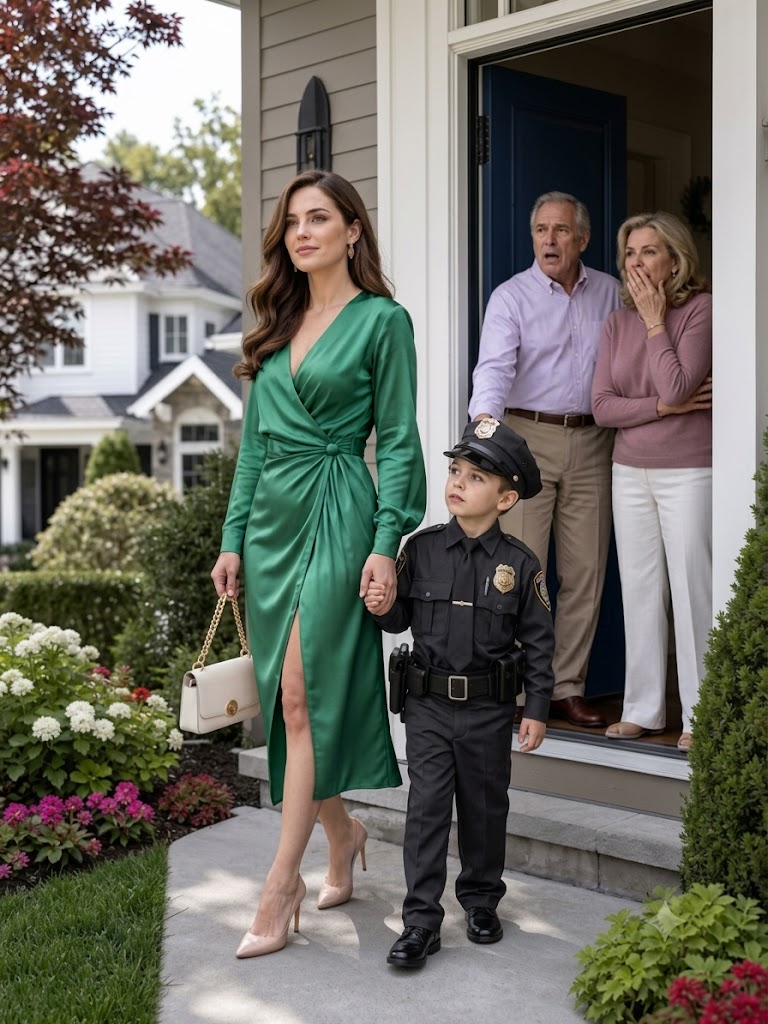
The Son She Protected in Silence
At nineteen, Tessa Harrow walked into her parents’ living room with a secret that felt too heavy for her small hands.
The house sat on a quiet street outside Richmond, Virginia, with trimmed hedges, white porch railings, and neighbors who remembered every car that stayed too late in a driveway. Her mother, Celeste, was folding clean towels on the couch. Her father, Roy, had just come home from his job at the distribution warehouse, his work boots still dusty by the door.
Tessa stood near the coffee table for almost a full minute before she found the courage to move.
Then she placed the pregnancy test in front of them.
Celeste’s hands stopped.
Roy stared at the test as if it had insulted him.
“Who is he?” Roy asked.
Tessa swallowed hard.
“I can’t tell you.”
Her mother looked up, already pale.
“Tessa, what do you mean you can’t tell us?”
“I mean I can’t say his name yet,” Tessa whispered. “But this baby has to be protected.”
Roy rose from his chair slowly.
“Protected from what?”
Tessa pressed both hands against her stomach, though there was barely anything to show yet.
“From people who would use him before he even gets a chance to live.”
Roy’s face hardened.
“So now you’re speaking in riddles? You come home with this, refuse to name the father, and expect us to accept it?”
“Dad, please. One day you’ll understand.”
“No,” he said. “I understand enough. You made a choice, and now you want this family to carry the shame.”
Celeste began crying, but she did not stand beside her daughter.
Tessa looked at her mother, silently begging for one kind word.
None came.
Roy pointed toward the hallway.
“You have one choice. You either handle this quietly, or you leave this house.”
Tessa’s eyes filled with tears.
“If I lose this baby, all of us will regret it.”
Roy’s voice turned cold.
“Then pack your things.”
That night, Tessa left home with one suitcase, a worn blue jacket, and a small envelope hidden inside the lining of her bag.
Inside the envelope was a photograph, a letter, and the truth no one was ready to hear.
Ten Years Without a Home to Return To

Tessa did not go far at first.
She spent two nights in a cheap motel near the bus station. On the third morning, she took a bus to Cincinnati, Ohio, because an old friend from school had moved there and offered her a couch for two weeks.
Two weeks became two months.
Two months became a new life.
Tessa cleaned offices before sunrise. She answered phones at a dental clinic in the afternoon. At night, she took online business classes while sitting on the floor beside a secondhand crib.
When her son was born, she named him Miles.
Miles came into the world quiet and watchful, with dark blue eyes that made nurses pause.
“He looks like he already knows something,” one nurse joked.
Tessa smiled through her tears.
“He does,” she whispered. “He knows he is loved.”
As Miles grew, Tessa worked harder than she thought a person could work and still keep breathing.
She learned how to stretch twenty dollars through a whole week. She learned how to smile at school meetings when other mothers talked about husbands and grandparents. She learned how to answer painful questions with gentle half-truths.
“Do I have a dad?” Miles asked when he was six.
Tessa sat beside him on his bed and brushed his hair away from his forehead.
“Yes, sweetheart. Your father was a good man.”
“Then why isn’t he here?”
Tessa felt the old ache open inside her chest.
“Because sometimes good people are taken from our lives before we are ready.”
“Did he know about me?”
She nodded.
“He knew. And he loved you before you were born.”
Miles accepted that answer for a while.
But children grow.
And questions grow with them.
The Man in the Photograph

The truth began before Miles was born.
His father’s name was Graham Bellamy.
He was twenty-seven, kind, serious, and nothing like the wealthy men Tessa had imagined when she heard the Bellamy name. His father, Sterling Bellamy, owned Bellamy Harbor Group, a private shipping and real estate company with offices across the East Coast.
Graham could have lived loudly.
Instead, he volunteered at a community reading program where Tessa worked part-time during college.
That was where they met.
He noticed that she stayed late to stack chairs. She noticed that he spoke to children like their thoughts mattered.
They fell in love quietly.
Graham told her he wanted to leave the family company and build something honest on his own.
But then his father became ill, and people inside the company began fighting over control.
Graham discovered that some relatives were trying to push him out before he could inherit his legal share. They wanted the company, the property, the voting rights, and the family trust.
Then Tessa became pregnant.
Graham was afraid, but not of the baby.
He was afraid of what his family would do if they knew he had an unborn child.
“Tessa,” he told her one rainy evening, holding both her hands, “if anything happens to me, you cannot tell anyone about the baby right away.”
“Don’t say that.”
“Listen to me. My grandfather’s trust has one condition. If I have a child, that child becomes my direct heir. Not my cousins. Not my uncle. My child.”
Tessa stared at him.
“You’re scaring me.”
Graham took an envelope from his coat.
“This has copies of everything. The trust clause, my letter, and the attorney’s name. Promise me you will protect our baby first.”
“Graham, I don’t want money.”
“This isn’t about money,” he said softly. “It’s about keeping them from erasing my child.”
Three weeks later, Graham was gone after a sudden road accident on his way to meet the family attorney.
Tessa was nineteen.
Pregnant.
Heartbroken.