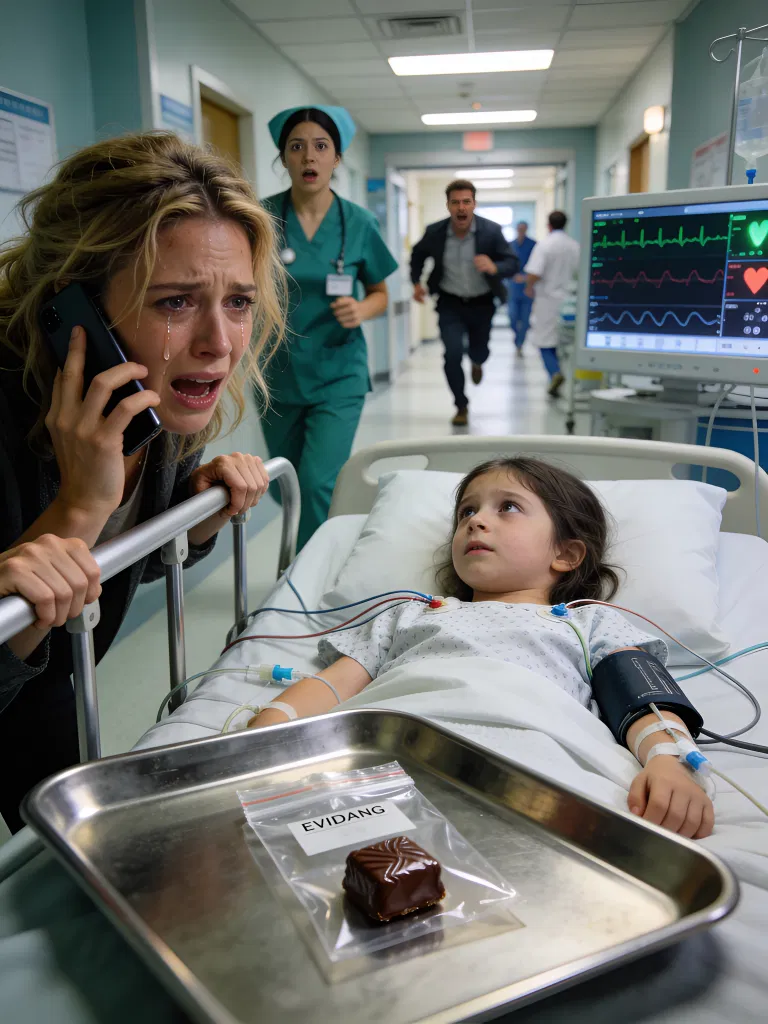
Spring came softly to the suburbs of Portland, Oregon — rain-speckled mornings, blooming dogwoods, and quiet streets where Emily Carter believed she had built a steady, predictable life.
That morning felt ordinary.
Emily flipped pancakes while thinking about her ten-year-old daughter’s class presentation. She had worked for years as a pediatric nurse at Riverbend Medical Center. She understood how fragile life could be — yet somehow, she believed tragedy happened to other families.
“Mom, what if I mess up my science project?” her daughter, Chloe Carter, asked, rushing downstairs with her backpack slipping off one shoulder.
“You won’t,” Emily said gently, smoothing her daughter’s hair. “You practiced. You’re ready.”
Her husband, David Carter, had already left for work — another early morning, another rushed goodbye. Lately, there had been many of those.
Over the past few weeks, Chloe had seemed different. Pale. Tired. Headaches. A fading appetite. Emily told herself it was stress, maybe a growth spurt.
Until the call came.
“Mrs. Carter?” the school nurse said, her voice tight. “Chloe collapsed in class. You need to come immediately.”
Emily barely remembered the drive. By the time she reached the school, Chloe was conscious but weak, her skin ghostly white.
At the hospital, everything moved fast. Monitors beeped. Blood was drawn. Doctors spoke in urgent murmurs.
Emily tried to stay composed — the nurse in her battling the terrified mother inside her.
Then one of the staff nurses approached her, face drained of color.
“Ma’am,” she whispered urgently, “call your husband. He needs to get here right now.”
Emily’s stomach dropped. “Why? What’s happening?”
“There’s no time to explain. Please — hurry.”
Her hands trembled as she dialed David.
When he arrived thirty minutes later, breathless and pale, the doctor delivered the words that shattered everything.
“We’ve found toxic traces in your daughter’s bloodstream,” he said carefully. “Not a single exposure — repeated, small amounts over time.”
Emily felt the room tilt.
“Toxic?” David repeated weakly.
“We’ve contacted authorities,” the doctor continued. “This appears intentional.”
The air thickened with disbelief.
Detective Laura Bennett from the Portland Police Bureau arrived shortly after, calm but firm. Questions began — about food, school, visitors.
Chloe stirred weakly and whispered something that froze the room.
“Dad’s friend… the lady who brought cookies.”
Emily slowly turned toward her husband.
David’s face drained of all color.
In the hours that followed, the truth unraveled piece by piece — an affair, secret meetings disguised as business trips, and a woman who had been slowly giving Chloe sweets laced with arsenic-based poison, believing that removing the child would secure her future.
The betrayal cut deeper than the crime itself.
Chloe survived. The dosage had been gradual — harmful, but not fatal. Doctors began treatment immediately.
But as Emily sat beside her daughter that night, listening to the steady rhythm of the monitors, she realized something profound:
The danger hadn’t come from the outside world.
It had walked into her home, smiled at her child, and called itself a friend.
And when the full truth finally settled between her and her husband, neither of them could speak.
Because some betrayals don’t just break trust.
They rewrite your entire life.